Beyond the Fading Darkness: Dunmore Makes His Move
Zac Northup
READ TIME:30min
A Sneak Peek at Beyond the Fading Darkness, Chapters One Through Four
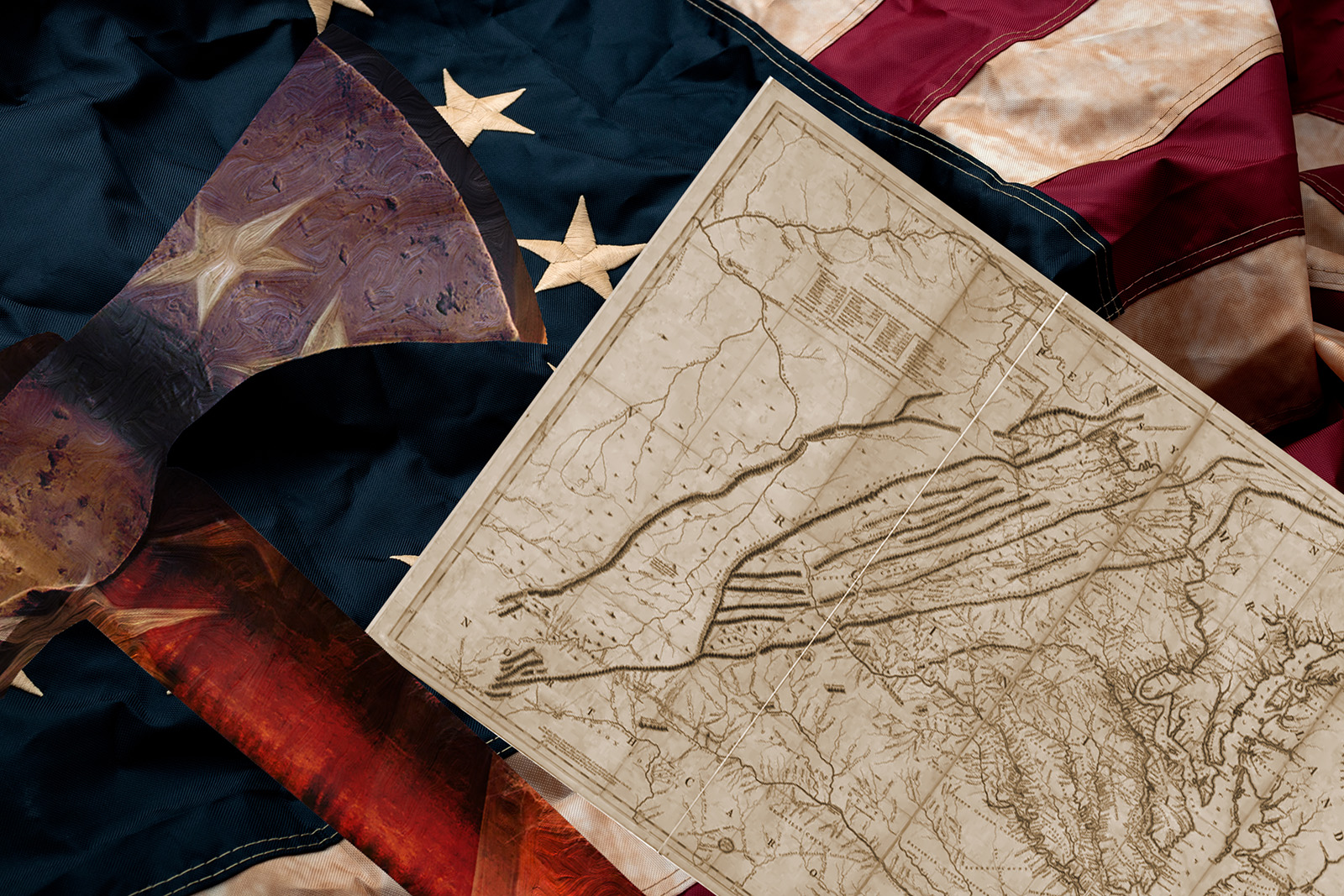
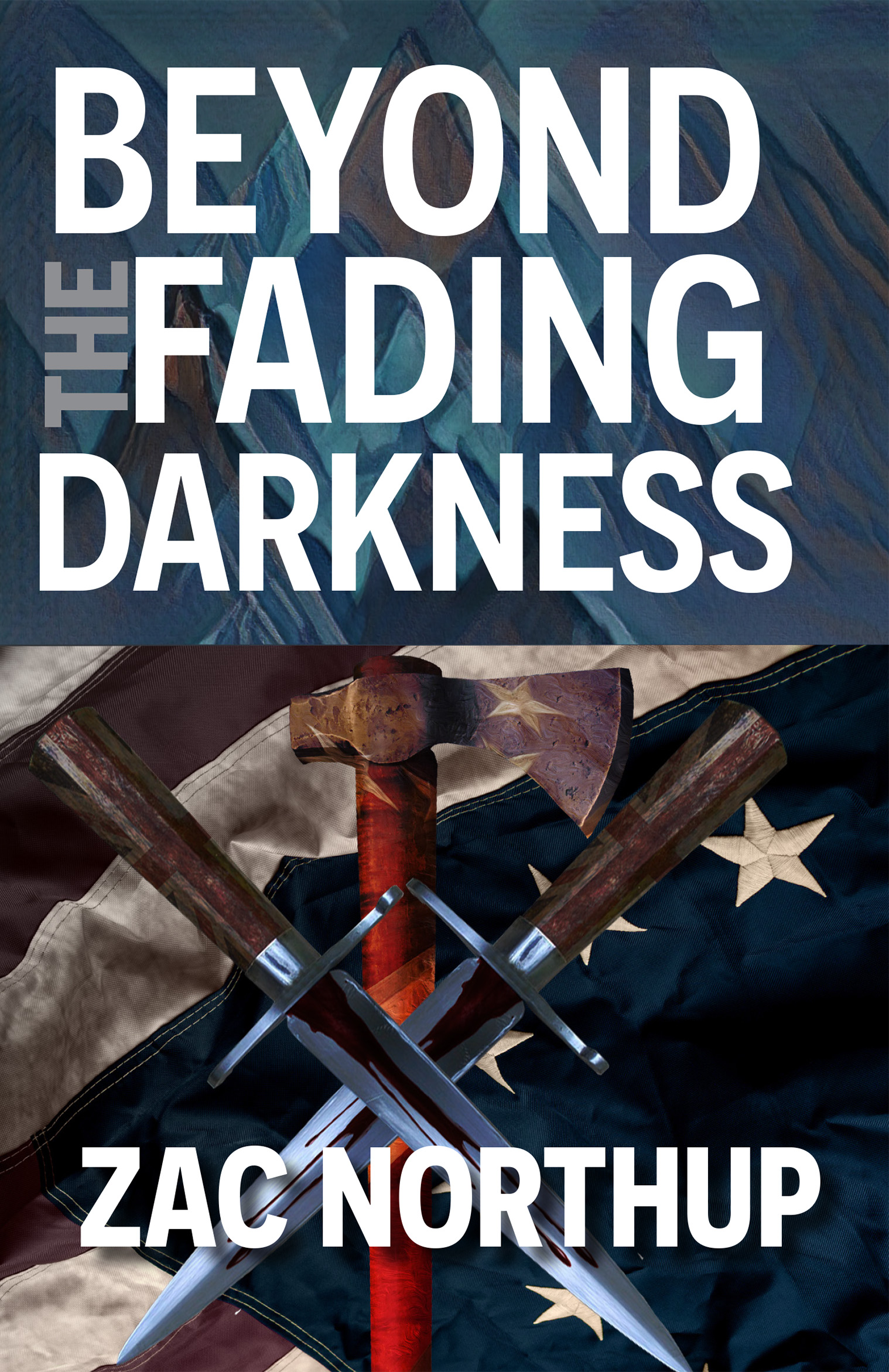
Lord Dunmore has returned to Williamsburg and is faced with the realization that the same men he mobilized to fight the Shawnee Nation are now preparing to join the rebellion against King George III and Great Britain. Willing to do anything to keep Virginia under Great Britain’s flag, Dunmore conspires with a mysterious agent to assassinate the leaders of the patriot movement in Virginia before they can launch a full-scale war against the Crown. The intrigue, espionage, and murders produced by Dunmore’s plot forces John Dickinson, Lydia Townsend, Red Hawk, Cornstalk, Logan, and Henri Thevenin, to once again risk everything to protect their families and homes.
Chapter One
Robert Connolly fidgeted with a small block of wood and wondered why Lord Dunmore was making him wait. The whitewashed walls of the foyer were covered with knives, swords, and over five hundred firearms. As he looked around the room, it occurred to him that the hundreds of weapons were either meant to give visitors the impression of a grand Scottish hunting lodge or, more likely, serve notice that the man who occupied the house was a person of great power. The mansion’s opulence was a display of authority that reminded Connolly why he had worked so hard to become Dunmore’s agent on the frontier. The fastest way to achieve status and affluence in the colonies was to do things for powerful people that other men would not do.
Get the Book on Amazon
Rising from the upholstered bench he had been sitting on for over an hour, he examined the walls carefully. He leaned closer to inspect the highly polished handle of a rapier and heard footsteps echoing off the planked floorboards before a footman rounded the corner. Dressed in fine clothes that befit the status of a black man working in service to a royal governor, he spoke in King’s English with only a hint of a Caribbean accent, “Lord Dunmore will see you now, sir.”
Zac Northup – STUFF is a reader-supported publication. To receive new posts and support my work, consider becoming a free or paid subscriber.
Connolly followed the footman through the main hall and up a staircase before entering Dunmore’s private study just to the right of the top landing. There, John Murray, Fourth Earl of Dunmore, Governor of the Royal Colony of Virginia stood looking out a large window that opened to the mansion’s exquisitely manicured garden.
Hearing the door shut behind him, Connolly bowed in courtesy, “Lord Dunmore, as requested, I am at your service.”
Dunmore continued to look out the window for a moment, “Dr. Connolly, it is good of you to come. How goes Fort Dunmore?” he asked, in a businesslike tone, devoid of what was normally his friendly disposition.
After the war with the Shawnee, in recognition of his victory, the governor renamed Fort Pitt, Fort Dunmore. Robert was still not accustomed to it, and had to think for a moment before answering, “All is well, your Lordship. The treaty with the Shawnee signed last October still holds, and Chief Cornstalk has been actively engaged in pacifying some of the younger warriors who survived the war. There are still malcontents, particularly the one they call Blue Jacket, but Cornstalk assures me he can be managed. Separately, the Pennsylvanians continue to make trouble and pass caustic threats,” Connolly said.
“You would think the Quakers could control their rabble. Will they become a problem again?” Dunmore asked, still focused outside.
“No, your Lordship,” Connolly replied.
Dunmore turned and smiled in a more familiar manner, “Good. And our land projects?”
“I have continued to quietly send surveyors into the Ohio Country to mark prime parcels for your purchase. By the end of the year, we should have somewhere close to 20,000 acres marked and ready for acquisition, provided the Pennsylvanians do not cause any further trouble.”
Dunmore stepped over to a small table with a crystal decanter and two glasses, “Madeira?” he asked, pouring himself a glass of the sweet wine.
“Certainly, thank you,” Connolly replied.
Dunmore handed him a glass and motioned to two comfortable chairs next to the fireplace, “Have you heard any rumblings along the frontier from these so-called Committees of Safety that damnable group in Philadelphia has created?”
Connolly noted that Dunmore refused to even say the words Continental Congress, “Only rumors and speculation, your Lordship.”
Dunmore stared into the flames as he spoke, “Since I dismissed the House of Burgesses last year, I have heard constant rumblings coming from the coastal planters and landed gentry, many of whom are active officers in the militia. I am afraid that these treasonous committees are beginning to overlap with the militia leadership. If that becomes widespread, it will represent a formidable challenge to the king’s interests in Virginia.”
Connolly took a sip of the madeira, “Yes, I am afraid the wrong Lewis was killed at Point Pleasant last year.”
“Charles Lewis was just as sympathetic to rebellious tendencies as his brother Andrew,” Dunmore said, “but even if they had both been killed, it would have been insignificant compared to the total losses for which I was hoping. It was not an accident that I was slow to bring my half of the army down the Ohio River from Fort Pitt. I had hoped the Shawnee would wipe out all of Lewis’ men. If that had transpired, the militia’s traitors would no longer be a threat. But that strategy failed with Cornstalk’s incompetence.”
“So, how do you plan to deal with the disloyal members of the militia now?” Connolly asked.
Dunmore finished off his drink and set the glass on the table as he walked back to his desk. Connolly rose and stood politely on the opposite side, “I have not decided on a final strategy yet. I did, however, send General Gage a letter requesting a regiment of British Army regulars be moved to Williamsburg, but have not heard back. Frankly, I do not expect reinforcements anytime soon. As Gage continues to confiscate powder and weapons in the towns and villages around Boston, something is bound to happen. He will be overwhelmed. Just last September, when a wild rumor circulated that the Royal Navy was bombarding Boston, fourteen thousand members of the Massachusetts militia descended on the town within a matter of hours. The war has not even started yet, and Gage is already outnumbered.”
Zac Northup – STUFF is a reader-supported publication. To receive new posts and support my work, consider becoming a free or paid subscriber.
Connolly nodded but said nothing. He had learned to let his benefactor feel as if he was doing all the thinking. Dunmore picked up a piece of paper and glanced at it before putting it back down, “We must gauge the attitudes of the Ohio tribes and Loyalists along the frontier. Specifically, if war breaks out, how many Indian nations can we expect to rally to our support? I must know this number to develop a proper strategy,” Dunmore said.
Connolly shifted slightly from one foot to the other, and cleared his throat, “Your Lordship understands, of course, that the recent war with the Shawnee will not inspire them, or any other tribe in the Ohio Country to ally themselves with us, correct?”
Dunmore looked at Connolly for a moment and tapped his finger on the surface of his desk as he was thinking, “I do not just want them as passive allies. I need them to be active participants against the rebels. If we can encourage them to begin raiding along the border once again, it will provoke the militia to respond as they did before, drawing manpower away from the coast. This will allow me to organize a Loyalist regiment locally, and British regulars from Boston, should they come.”
Connolly thought for a moment before answering, “Barring an egregious breech of the treaty, I can see few scenarios where the Ohio tribes will want to enter another war so soon after the Shawnee defeat at Point Pleasant. The war interrupted their fall harvest, and many Shawnee towns went hungry over the winter. I suppose that land, food, weapons, and perhaps even bounties for scalps might entice the more radical Kispoko to take up arms again, but most of the clans will simply want to plant their spring crops and rebuild.”
Dunmore turned to look out the window once again as he thought about the stakes. After a minute of silence, he turned, pulled a piece of paper out of the center drawer of his desk, and began writing, “I am extending a line of credit for £1000 from the colony’s treasury. I want you to return to Fort Dunmore and quietly reach out to any tribal chief who might be willing to take up arms alongside his Majesty’s forces should war come against the rebels. Offer them money, food, and weapons. If the Shawnee lack motivation, take whatever steps are necessary to entice them to join our cause. Despite our strained relations, we need another uprising against settlements along the frontier, even if we must manufacture circumstances ourselves.”
“His Lordship understands that the casualties on both sides could be… extreme, correct?” Connolly asked.
“I am certain of it, Dr. Connolly. But if the deaths of disloyal settlers and native savages furthers his Majesty’s goals and objectives in America, that is an acceptable outcome.”
“As you wish, your Lordship. I will make the arrangements.” He stepped back from the desk, and bowed, “Thank you for the madeira.”
Dunmore gave a courteous nod, picked up a quill and began jotting a note. Before Connolly reached the door, he looked up, “Robert?”
“Yes, your Grace.”
“Be thorough in your work.”
Zac Northup – STUFF is a reader-supported publication. To receive new posts and support my work, consider becoming a free or paid subscriber.
Chapter Two
Peyton Randolph stood near the pulpit and prepared himself for the day’s business. St. John’s Anglican Church was small, nowhere big enough to comfortably seat all the Burgesses, but they had no choice. Governor Dunmore’s dismissal of the colony’s legislature and the threat posed by British ships along the Virginia coast forced the decision to move the Second Virginia Revolutionary Convention to Richmond. But the weather for late March was pleasant, and travel from the counties had gone without incident.
A lean country lawyer wearing a rust-colored suit, hair closely arranged on the sides, sat in the third row of pews on the left side. Around him, planters from across Virginia, including George Washington, Thomas Jefferson, and Richard Henry Lee chatted and waited for the president of the convention to call the assembly to order. For some, the latest news from London was good. King George III and Parliament were giving indications that the blockade around Boston, and the Coercive Acts that threatened freedoms in the American colonies might be lifted. But the man in the rust-colored suit believed that the time for reconciliation was over. War was imminent, and Patrick Henry intended to force the issue.
As president of the convention, Randolph called everyone to order. The Burgesses had spent three days debating whether Virginia should send delegates to the Continental Congress in Philadelphia, but Henry, Washington, Jefferson, and many others wanted to make it clear that if Virginia took that step, it also needed an army to protect its people from British reprisals.
After every member of the convention spoke, Henry rose and Randolph gave him the floor, “Mr. President, I rise to propose one more resolution, and it is one that I fear must be fully considered and adopted by this august body.” Looking around the room, he met Washington’s eyes before looking away, “While the steps of activating and equipping a well-armed militia in every county is imperative, we must also recognize the need for one more measure. Governor Dunmore has threatened multiple times to seize powder and weapons stored in each county for the common defense of our communities. The presence of Royal Navy ships near our capital in Williamsburg shows that he is laying plans to make war upon us all; to enforce the evil edicts of Parliament and turn all his Majesty’s subjects in America into abject slaves. Corrupt and evil men surrounding the king have their hearts and minds set on this, and we have no choice but to fight back. Therefore, I submit for this body’s approval and adoption, a resolution that requires us to muster the militia, but also develop plans for its offensive use. We must prepare to attack rather than defend, particularly when it comes to securing vital supplies and strategic places.”
To Henry’s surprise, loud applause broke out among several of the delegates, with only a few objections. The delegation from Norfolk believed the king would offer a satisfactory peace agreement before things got out of hand. But Henry held a different view, “Mr. President, it is natural for a man to indulge in the illusions of hope. We are apt to shut our eyes against the painful truth – to listen to the song of that siren, till she transforms us into beasts. Is this the part of wise men engaged in a great and arduous struggle for liberty?”
Henry paused to let the question hang in the air, “I know of no way to judge the future but by the past. And judging by the past, I wish to know what there has been in the conduct of the British ministry for the past ten years to justify the hopes with which these gentlemen have been please to solace themselves and the House? Is it that insidious smile with which our recent petition for reconciliation has been received by the king? Trust it not, sir. Suffer not yourselves to be betrayed with a kiss. Ask yourselves how this gracious reception of our petition for peace comports with those warlike preparations which cover our waters and darken our land. Are fleets and armies necessary to a work of love and reconciliation? Let us not, I beseech you, sir, deceive ourselves longer.”
Get the Book on Amazon
Henry was an expert at reading the emotions of an audience, and his style mixed logic and passion in a way that few could match. Using an even, conversational tone, he held up one hand and slowly balled it into a fist, “We have petitioned – we have remonstrated – we have supplicated – we have prostrated ourselves before the throne.” Henry let his voice begin to crescendo into a booming roar, “There is no longer any room for hope. If we wish to be free… we must fight!”
Henry lifted his head and stared at the ceiling as if in prayer. He whispered and every delegate leaned forward to hear his words, “Gentlemen may cry peace, but there is no peace,” he said before letting his voice grow louder once again. “Our brethren in other colonies are already in the field! Why stand we here idle? What is it the gentlemen wish? What would they have? Is life so dear, or peace so sweet, as to be purchased at the price of chains and slavery?” Pounding his right fist into his left palm, he slowly held his arms together above his head as if they were bound in chains and turned to look at the sanctuary’s cross, “Forbid it, Almighty God!”
Spinning around, he directed his fiery gaze at the Burgesses who had been advocating appeasement to Parliament and the king, and with his head held down, eyes shut, he shook it back and forth with slow and deliberate action. Lifting his head to stare coldly at the Loyalist Burgesses, his voice became matter of fact, even, and monotone, “I know not what course others may take, but as for me… give me liberty… or give me death!”
The audience sat in stunned silence as Henry took his seat. After a few moments, Richard Henry Lee seconded Patrick Henry’s motion for approval of the resolution. By unanimous consent, the Second Virginia Revolutionary Convention voted, for all practical purposes, to take the colony to war.
As the delegates stood and gave a thunderous round of applause, John Dickinson joined in and winced at the pain in his shoulder as he clapped. Leaning over, he had to shout so Andrew Lewis could hear him, “We have a lot of work to do.”
Thanks for reading Zac Northup – STUFF! This post is public so feel free to share it.
Chapter Three
Karl heard the noise from inside the Red Horse Tavern and suspected his father was having another go in Battletown. Located just a few miles south of their homestead near Winchester, Battletown was little more than a couple seedy establishments where men came to gamble and cavort with barmaids, or to simply drink too much and brawl. It was a rough place, popular with rough men. On some evenings, ruffians and malcontents seemed to end every round with vicious fisticuffs in the same manner that normal men would say goodbye or good evening. At least six minor brawls broke out every night, and one or two of those would grow into riots that spilled out into the road. Within the Red Horse’s four walls, chaos was normal and expected.
Having celebrated his seventeenth birthday just a week prior, Karl was big enough to take care of himself. His father had taught him how to fight frontier style before he was twelve, and it was a skill that he had used often. Tall, with broad shoulders, and muscular arms, he was a capable fighter. Sometimes anger got the best of him, especially when he had to retrieve his father from another night of debauchery. It was during these angry times that Karl Gustafson did not suffer fools.
As he approached the tavern, several men saw him coming and stepped away from the door. But one man, Alfred Smythson, decided to try Karl on for size once again. Smythson was two years older than Karl and had been a brutal bully when they were younger. Karl was much smaller then, and Smythson’s height always gave him an advantage. But that was before work on the farm and the local blacksmith’s forge had helped Karl grow strong. Occasionally, Smythson needed to be reminded that they were no longer children.
Fueled by alcohol and hubris, Smythson stood a few steps in front of the tavern door. As Karl approached, the burly man turned to his friends and smiled. Karl was in no mood to waste time with the normal insults and posturing that were part and parcel of fights. Without breaking stride, he swung and landed a powerful right cross just forward of Smythson’s left ear that knocked him unconscious. Karl ignored the stunned looks on the other men’s faces. He opened the tavern door and walked inside.
The room was filled with smoke from a large stone hearth, candles, and tobacco pipes. The tables and chairs that were in various states of disrepair had been pushed to the sides, and a couple dozen men stood in a semicircle around the open space in front of the bar, shouting and waving wads of money in the air. Karl pushed his way through the crowd and saw his father fighting three men at the same time. One appeared to be unconscious on the floor, his nose pushed in and bloody, while the second was held in a headlock at waist level. The third man was standing just outside his father’s reach, taking hesitant steps, trying to find an opening to attack. Seeing what he thought was an opportunity, he reared back to throw a punch. Before he could land the blow, though, Frederick Gustafson laid him out with a brutal right cross. Seeing the second man lying on the floor, Frederick turned his complete attention to the man in the headlock. Karl watched as his father grabbed the man’s hair and drove his face down onto his knee. There was an audible crunch and the man fell backwards to the floor. He rolled over and held up his hands in surrender. Everyone erupted in loud cheers or groans, as men settled bets and toasted the performance. Frederick reached down, helped the man up and shook his hand.
Karl stepped over and grabbed Frederick’s arm as he was taking a drink of ale from a large pewter stein. Liquid spilled from the cup, and Frederick started to rear back to strike before he realized it was his son. He smiled and set the stein on the bar. Blood flowed from his nose and a cut on his lip, “Is it time to go home, my boy?” Frederick asked.
“Yes father, mother sent me. There are two men at the house who want to speak with you,” Karl said as he took the stein from his father’s hand and set it on the bar.
“Two men? Who are they?” Frederick asked with a slurred voice as he placed one hand on the bar to steady himself.
“They say their names are Mr. Smithfield and Mr. Shrewsbury. The younger one says he fought with you at Point Pleasant last year.”
Frederick smiled and slapped his son on the back, “Ah, Smithfield is a brave man. He is one of Captain Dickinson’s Rangers. He helped rid the world of that bastard, Shamus McGrew,” Frederick said as he leaned his back against the bar, “Did he say what he wants?”
“He did not,” Karl said, as he looked around the tavern.
“Well then, let us go see,” Frederick said.
Karl steadied his father as they stepped over the two unconscious men still on the floor and pushed through the crowd. Random drunkards slapped Frederick on the back. He shook hands with several men before he and Karl stepped out of the smoky tavern into the cool night air. Karl had thought about bringing a horse but suspected that his father would be in no condition to ride. As they made their way down the dirt road toward Winchester, he watched Frederick stumble along, “Why do you go there, father?”
Frederick looked at his son in the moonlight, but could barely make out his Karl’s face, “I have told you before, I like to fight.”
“But you are not fighting men. You fight drunks. There is no sport in it.”
“Yes,” Frederick said, as he stumbled slightly without fully losing his balance, “but fighting drunks at the Red Horse is better than nothing.”
Karl stopped, “Father, this is beneath you.”
Frederick turned to look at his son’s shadow and began to speak but stopped in the middle of the road and put his hands on his knees.
Karl watched as his father violently expelled the miserable poison that passed for alcohol at the Red Horse Tavern. After the retching was over, Karl placed his hand on Frederick’s shoulder as the middle-aged German wiped the residue from the corner of his mouth and smiled at his son.
In the moonlight Karl did not see the strength that he usually saw in his father’s eyes. Instead, beneath the smile, and the horrible stench of bile and alcohol, Karl saw a great longing and sadness. An emptiness that was being filled with meaningless, drunken brawls at a decrepit tavern in the Virginia woods. It was then that Karl understood the truth; his father was searching for a purpose. He needed a cause.
Chapter Four
They heard the mob before they could see the torches. Neighbors and strangers shouted his name, calling for Roger Mitchell to come out and answer for his crimes against the people of Norfolk. Effigies of him, Lord Dunmore, and King George III swung from poles carried by men who made no attempt to hide their faces. The days of concealing who they were had long passed.
The mob came to a halt just at the edge of the dooryard to Mitchell Mansion and a man with a piece of white linen tied around his arm stepped forward and shouted above the din of the crowd, “Come out, Mitchell, we know you are in there!”
Roger looked at his wife and terrified children, “Susan, take the children upstairs and lock yourselves in the bedroom.” Susan looked at her husband, eyes wide in panic, nodded and scurried their three boys and two girls up the stairs, the fading sound of the girls’ silk dresses swishing and the boy’s shoes on the wood floor above marking their progress.
When he heard the door shut, he looked out the window for a moment. He slid the window open and shouted, “You must all leave. I am a royal official, a customs officer, duly appointed by his Majesty’s Colonial Secretary, Lord Dartmouth, and confirmed by Governor Dunmore. You are violating the law by being here and threatening me with this repugnant display.”
The man looked at Mitchell and turned his head to the side slightly so the crowd could hear, “Mr. Mitchell, the Committee of Correspondence for the Virginia Association has received reports that you have used your position to engage in corrupt practices that threaten the freedom of the people of Virginia. Further, members of the Committee of Safety were present this Monday past, when you directly insulted the legitimacy of the American cause and disparaged the support our people have shown for our suffering brothers in Boston. Further, by allowing the offloading of British goods and tea from ships docked at the wharf here in Norfolk, you are in direct violation of the non-importation proclamation passed by both the Continental Congress, and the First Virginia Revolutionary Convention in Williamsburg.”
“Those organizations have no legitimacy to regulate the king’s governance!” Mitchell shouted.
The crowd, now numbering in the hundreds, erupted in a thunderous roar that only partially subsided as the man waved his hand and tried to speak, “Mr. Mitchell, you have two choices: You can come outside, renounce the cruel and unjust policies that Parliament is using to enslave all Americans and take an oath of loyalty to the Virginia Convention, or you can remain inside. If you choose the second option, we will break down your door, ransack your house, and introduce you to tar and feathers. What say you?”
“You have no authority to make such threats!” Mitchell shouted in rage.
The man exhaled slightly and gave a smile as he started to lead the mob forward. Mitchell thought of his wife and children and waved his hands through the window, “All right, yes, I will come out. Give me a moment to calm the fears of my family and reassure them of our safety.”
The man held up his hand and motioned for the crowd to stop. A dozen men continued to surge forward before several others restrained them. “Good,” the man said, “you have made the right choice for you and your loved ones. You have two minutes.”
Mitchell shut the window and ran up the stairs to the bedroom where his wife and children were hiding. He pounded on the door, “Susan, open the door!” He heard the lock turn and the door flung open, “Roger, I heard what those evil men said. Surely you are not going out there?”
Ignoring his wife’s question, Mitchell grabbed her arm, “You must take the children and run to the Royal Army barracks near the wharf. The soldiers will protect you. Use the back door that leads through the garden and go immediately.”
“Will they not be watching the rear dooryard? They will not let us go!” Susan said as tears flowed down her cheeks.
Get the Book on Amazon
“They want me. Thus far, the mobs have left women and children alone. You will be safe until they get their blood up. You must leave, while there is time.” Roger looked at his wife and children and gave his wife a kiss, “I love you all. You must go immediately.”
Roger led Susan and the children down the stairs and hurried them to the back door. He kissed his wife one more time and watched them scurry through the cast iron gate that led to a small alley that ran behind the houses along Boush Street. With God’s providence, they would be at the barracks in a few minutes. Turning, he looked down the hallway at the front door. Flames from the torches shone through the arched window above the door, and shouts coming from the street told him he was out of time. Straightening his black vest at the waist, he walked out the front door to meet the mob.
Standing on the front porch, Roger Mitchell scanned the crowd, hoping to see at least one friendly face. Recognizing no one, he walked down the steps and stood before the man who appeared to be leading the rabble and spoke calmly, “Now, sir, what is it you want from me?”
The man pulled a piece of wrinkled, stained paper from his jacket pocket and handed it to Mitchell, “You are to read this declaration of guilt aloud, so all can hear that you not only renounce the office you hold, but also the evils that Parliament has perpetrated against the people of America. Then you must recite the loyalty oath as it is written on the second page, and make it clear that, on your honor, you pledge to obey the declarations of the Continental Congress and the Virginia Revolutionary Convention.”
Mitchell turned the documents over to see both sides without reading them, “You speak to me of guilt? You tell me to pledge my loyalty to this rabble? What do you know of honor and loyalty?” He tossed them on the ground, “I will not sign your document. I will not make any pledge. You can all go to hell. God save King George!”
The crowd fell silent as the man with the white armband frowned slightly and picked up the crumpled documents. He stepped forward and whispered, “So be it.”
The man turned and walked away as the mob rushed forward, grabbed Roger Mitchell, and lifted him above their heads. Others ran for the house, began breaking windows, and crowded through the front door. As he was being carried down the street, his waistcoat, shirt, and shoes were ripped off, and blood flowed from his arms and face where fingernails tore at his skin. When they arrived at the center of Norfolk’s town green, Mitchell felt the air rush from his lungs as he was thrown to the ground next to an iron cauldron that sat above a large fire, the smell of tar filled the air. Raising his head slightly, the crowd laughed as several young boys ran up and kicked him in the face. A woman cut feather pillows open and dumped the contents on the ground. Two men dressed in sailor’s outfits picked him up by the arms and held him tight as a man who looked like he should be standing behind a counter at an apothecary poured hot pitch over Roger Mitchell’s head. When the thick brown liquid ran down his face and onto his shoulders, the sickening scent of burnt flesh wafted into his nose before the searing liquid covered his nostrils. Holding back the overwhelming urge to scream in agony, he thought to clamp his eyes and mouth shut to keep from being blinded and choking to death.
Three more buckets of tar were poured over his shoulders and back before four women picked up handfuls of feathers and covered Roger Mitchell from head to toe in goose down. When the mob was satisfied, eight men came running up with a long wooden rail. Still conscious and feeling every inch of his burning flesh, he was hoisted atop the rail and the crowd began parading him through town. The rail was wide enough for Mitchell to ride, but so thin that it cut into his inner thighs and groin as he bounced up and down with each of the porters’ steps. It was the most painful thing he had ever felt in his life.
An hour later, Roger Mitchell’s ordeal was over. The mob’s primal urges satisfied, he was dumped in the middle of Water Street naked, covered in tar, and alone. Lying there, after hearing the mob’s shouts and torments for what seemed like hours, he was struck by the silence. A few moments later, he heard footsteps approach on the cobblestones and forced his eyes open. The man who led the mob at his house stood over him, his face expressionless.
“Mr. Mitchell, you should have taken the oath. You are to leave Norfolk immediately. If you ever set foot here again, you will be shot for being the treasonous bastard that you are.”
Roger Mitchell prayed that Susan and the children made it to safety as he watched the man walk away into the night.
* * * * *
Lydia Townsend stepped through the shattered door of Mitchell Mansion and was nearly knocked over by a man carrying a small parlor chair out the front doorway. The house had been ransacked, everything of value carried away by the criminals who followed the Patriot committees around to take advantage of the chaos. She knew the ruffians and criminals did not support the cause, but she understood that their thievery and violence served a purpose of its own.
Pulling the hood of her green cloak to her shoulders, she walked through the house and into the rear garden where the separate kitchen sat twenty feet from the back door. She walked inside the brick building and saw that the mob had taken everything except random pieces of broken cookware that were scattered about. There was a cord of wood stacked beside the cooking hearth. She began tossing the firewood to the side and found the edge of the small hatch. Using a knife she carried beneath her cloak, she pried the hatch open and moved it out of the way. Her heart was racing, but she remained calm as she walked down the steps to the cellar. In the scant light of a candle, a woman, a small boy, and girl were sitting on the floor, shivering in fear. The slaves from Mitchell’s kitchen staff had fled, but this woman and her children did not belong to the Mitchell’s. They had escaped from a local plantation and were being hidden at the mansion until they could be spirited away back to Dickinson’s Meadow.
Lydia stepped toward her. The woman drew back. Kneeling Lydia extended her hand and whispered, “Do not fear, I am here to help.”
Buy The Book on Amazon
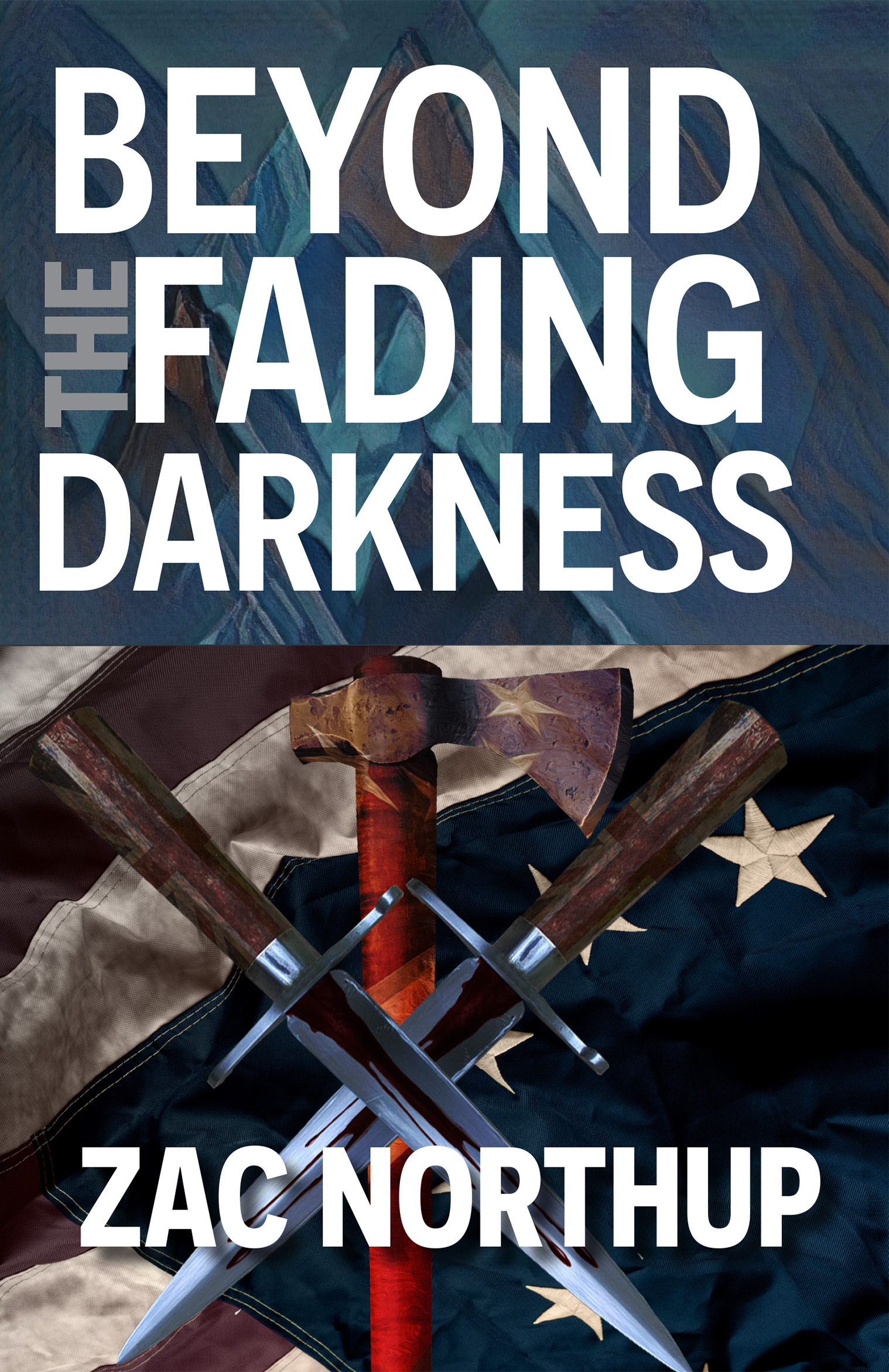
Lord Dunmore has returned to Williamsburg and is faced with the realization that the same men he mobilized to fight the Shawnee Nation are now preparing to join the rebellion against King George III and Great Britain. Willing to do anything to keep Virginia under Great Britain’s flag, Dunmore conspires with a mysterious agent to assassinate the leaders of the patriot movement in Virginia before they can launch a full-scale war against the Crown. The intrigue, espionage, and murders produced by Dunmore’s plot forces John Dickinson, Lydia Townsend, Red Hawk, Cornstalk, Logan, and Henri Thevenin, to once again risk everything to protect their families and homes.
As book two in the Fading Darkness series, Beyond the Fading Darkness reconnects readers with the characters they came to love and hate in Through the Fading Darkness. The rich narrative blends amazing history, political intrigue, espionage, and complex characters into a riveting thriller that, at times, feels like it was taken from today’s headlines.
Zac Northup – STUFF is a reader-supported publication. To receive new posts and support my work, consider becoming a free or paid subscriber.

