

Chapter Three
Special Offer for the Next Twenty Annual Subscribers:
Become an Annual Paid subscriber today and receive a free copy of Through the Fading Darkness on audiobook from Audible.com.
Chapter Four
John Dickinson wiped the sweat from his brow with the worn sleeve of a shirt that was soaked through. He and the twenty indentured servants who had contracted to work his fields had been out since sunrise and the August heat was beginning to take its toll. John looked over at Samuel and took comfort that his son-in-law, a man half his age, was just as tired. Using the rough-hewn handle of the rake to prop himself up as he surveyed the broad bottom land, John considered how far he had come since he was Samuel’s age.
As a young man born on a small farm in the Northern Neck area of the Potomac River, John wanted to see what he could make of himself away from his father’s overbearing hand. Shortly after turning eighteen-years-old, he leased fifty acres from Lord Fairfax’s land agent and convinced a beautiful girl named Martha Usher to marry him. The Ushers had the same modest origins as the Dickinsons and Martha’s comeliness motivated many suitors to seek her hand. John was fortunate that his good looks, broad shoulders, and independent spirit appealed to the confident young Martha, and she accepted his proposal without a moment’s hesitation. The couple moved into their new home along the Potomac in 1745.
The life that John and Martha built together was like many in the American colonies, especially with people on the frontier. The Dickinson’s union did not involve powerful families vying to expand vast land grants or gain status in Colonial politics. It was something more basic, unpolluted by prestige and aristocratic privilege. They simply loved each other and cherished their lives together.
The Dickinsons immediately tried to start a family but lost four sons during, or shortly after, childbirth. Their daughter, Elizabeth, was their only surviving child and was born just as John was called away to fight in the war between France and Great Britain. What became known as the French and Indian War lasted seven years, and John served with distinction, eventually being named captain of a company of Rangers in the summer of 1760. When he and his Rangers saved an entire battalion of British regulars during a surprise attack by Iroquois warriors near Fort Carillon, John received a two-thousand-acre land grant in the lower Shenandoah Valley. That land changed his life forever.
After the war, it took some time to survey the property, but John was able to move Martha and Elizabeth to the homestead in 1764. His sister, Bettie Dickinson Rollins, came to live with them a year later after her husband and two children died during an attack by an unknown group of warriors on their home in Pennsylvania during Pontiac’s War.
Once he felt his family was comfortable, John began selling or leasing small plots to friends, industrious families, and his indentured servants who completed their contracts. Using revenue from the land sales, he then purchased additional land grants from soldiers and former officers, and eventually, John’s holdings grew to more than ten-thousand acres in the Shenandoah and west into the Allegheny Mountains.
As more people moved in, the settlement grew to more than forty families, and when a large permanent fort was constructed on the property to protect against Shawnee and Mingo raids, the village became known as either Dickinson’s Meadow or Dickinson’s Fort. My family’s name is now part of this place. We are no longer strangers in a strange world. We belong here.
* * * * *
Samuel saw the contemplative look on John’s face and finished picking the insects off the tobacco plant he had been working on. He and Elizabeth had just celebrated their seventh anniversary. As the birth of their third child approached, they had decided to move their growing family to Williamsburg where Samuel planned to start a new trading concern that managed the sale of John’s crops to buyers in London. Telling John and Martha that he was preparing to take their only living child away, to say nothing of their grandchildren, was something that would have to be handled delicately.
Samuel’s father died fighting beside John at Fort Carillon in 1759, and his mother had passed away while giving birth to his stillborn sister four years prior. When John returned from the war, through connections with Colonel Andrew Lewis and Colonial officials in Williamsburg, he ensured Samuel received an education, and even managed to secure him patronage to attend the College of William and Mary. By the time Samuel returned to Dickinson’s Meadow, he was a respected merchant and had enough money to start a trading post and blacksmith’s foundry within the walls of Dickinson’s Fort. Though the frontier was part of his Samuel’s character, life in Williamsburg appealed to him. He would always be indebted to John Dickinson, but Samuel Shrewsbury had grown to see himself as his own man.
“What do you think we will get for the tobacco this year?” Samuel asked wiping his hands on his pants briskly.
“Difficult to say,” John replied, squinting to see Samuel through the sunlight as it began to touch the distant ridge. “Not much if we cannot keep these worms away.”
“Are they worse this year?”
“Perhaps, a little.”
Samuel picked more horn worms off another plant, “John, you have been my friend for close to fourteen years. You helped me become something. You have trusted me with your daughter. I thank you for that.”
Seeing the sincerity on Samuel’s face and wondering where this was going, John stopped what he was doing and met Samuel’s comments with a smile, “Is something wrong, Samuel?”
“No, nothing is wrong. Everything is wonderful, really. In fact, there is an opportunity that Elizabeth and I want to discuss with you later this evening.”
John Dickinson never shied from conversation, but unlike most men, he viewed words as a form of currency that should be spent conservatively, “All right. We can sit and talk after supper.”
Samuel nodded, “Excellent.”
As dusk approached, and the golden light of the late afternoon cast a warm, hazy glow across the green fields. John chuckled as Samuel smacked an insect on the back of his neck and quietly cursed the endless rows of tobacco.
Chapter Five
Martha, Elizabeth, and Bettie were used to the heat. Windows along the walls and doors on both ends of the brick building provided a comfortable breeze that made working next to the large stone hearth tolerable. All three women enjoyed cooking, and the smell of fresh baked apple bread and smoked brisket drifted into the breezeway between the kitchen and main house. Elizabeth’s two young boys, Thomas and George, were just outside the door, playing in the backyard on a small wooden horse. Remembering the deaths of her own husband and children, Bettie instinctively kept an eye on the boys.
“The flour is getting low,” Bettie said as she worked at a large wooden table in the center of the room. “I broke open the last barrel this morning.”
“We have a little more wheat from last year’s harvest. I will have one of the indentures grind a new batch,” Martha said.
Thinking of the conversation she and Samuel had the night before, Elizabeth wiped her hands on a small rag, “When will we be traveling to Williamsburg, Mother?”
“Perhaps in October, before the first frost. Your father has meetings with the Colonial land officer.”
“Samuel and I are excited to see the city. We need to buy a new bed. The boys have outgrown their trundle.”
“Can Samuel not make one?” Martha asked, glancing out the door to see the boys as they chased each other around the yard.
“I do not expect much from him in that area. We want larger beds for each boy; four posts, and a comfortable feather tic. Anything Samuel might make would go well in the barn, but not a bedroom,” Elizabeth said with a smile.
Bettie finished rolling twelve balls of dough and placed them in a Dutch oven before setting the large iron pot in the hearth’s hot coals. Wanting to change the conversation away from babies and husbands, she wiped the flour from her hands, “Are we getting new neighbors in the west valley?” she asked Martha.
“Yes, William and Lydia Townsend. You may remember them. John held their indentures several years ago,” Martha responded. “They bought the Fredrickson farm. John said they have already put a new roof on the cabin and repaired the barn.”
“Do they have children?” Elizabeth asked, subconsciously laying her hand on her belly to feel the movements of her unborn child.
“Yes, two small ones, a boy, and a girl I believe,” Martha said, wiping the sweat off her forehead with an apron that served as a rag, potholder, and occasional handkerchief.
“Where are they from?”
“Ireland originally. John’s agent purchased their contracts from a ship’s captain in Philadelphia when they stepped off the boat.”
“I hope she comes to the next militia muster,” Bettie said, returning to her bread making. “It will be nice to speak to someone new.”
Elizabeth and Martha continued to work on the meal as Bettie walked out to check on Thomas and George. Watching the boys take turns with the wooden horse, she looked up and realized there was no one else in sight. Everything was still and Bettie felt something she had not sensed in over ten years. She called for the boys to come closer when a series of loud shots echoed off the buildings and surrounding mountains. Inside, Martha looked at Elizabeth for a moment and ran to the nearest window. Across the dooryard, a group of Indians were crouched over one of the indentured men, striking him with tomahawks. Dozens more were running towards the Dickinson’s main house and servant cabins. Martha grabbed Elizabeth’s hand and pulled her to the kitchen’s door, “Elizabeth, get the boys and run to the house, now!”
* * * * *
John heard the shots as they echoed through the valley and knew immediately something was wrong. A single shot fired from a flintlock could mean anything, most likely a hunter or someone showing off his marksmanship skills. Multiple shots fired simultaneously, however, was coordinated action and that meant an attack of some sort. Without word, John and Samuel grabbed their flintlock rifles from a nearby wagon, and along with the others, began sprinting to the sound of the gunfire. By road, it was five miles to the fort and their families. We will never make it in time.
Chapter Six
Still holding Elizabeth’s hand, Martha dragged her daughter out the back door of the kitchen. Elizabeth grabbed George and made sure Thomas was safely in Bettie’s arms as they ran to the house and barred the door with a thick wooden beam John installed for such purposes. Martha retrieved one of John’s flintlock rifles from a nearby cabinet and moved to the back corner of the front room, concealed by the darkened interior but still able to see out the front window. Elizabeth and Bettie took Thomas and George to a linen closet just off the main room and lifted a small hatch built into the closet floor. The crawl space below was cramped, but ideally suited for the children. As they had practiced many times, George and Thomas jumped down and looked up at their mother.
“Stay here boys until I come to get you. I love you with all my heart,” Elizabeth said. The boys’ wide and frightened eyes stayed with her as she closed the hatch. Bettie retrieved two additional flintlocks from the gun cabinet, and the three women crouched together in the back corner of the main room, their hearts pounding against their chests.
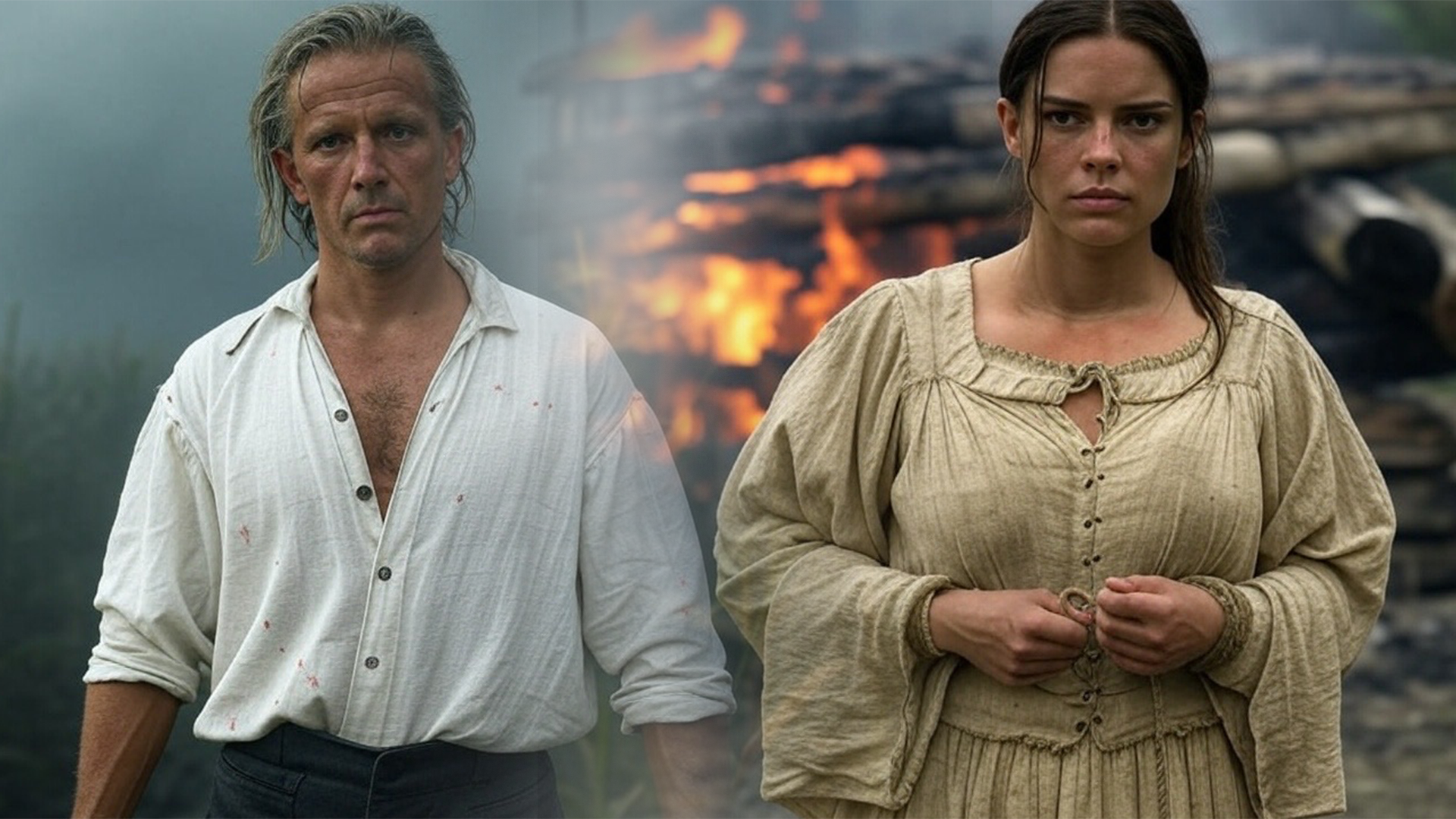
The smell of smoke from black powder and burning buildings began seeping into the room as Martha crept to the front window and peered out. Three of the six servant cabins were already on fire, and the bodies of men, women, and children lay scattered about where they were slain. She counted at least fifteen warriors, running between the buildings, many scalping and stripping the dead of their clothes while searching the bodies and cabins for anything of value. A man named Richard, a blacksmith who worked for Samuel, ran from one of the cabins with an ax and killed a warrior before being set-upon by three others. Martha had seen this kind of brutality in the war with the French but could hardly believe she was seeing it again. Withdrawing from the window she crouched with Elizabeth and Bettie and began to recite the Lord’s prayer.
Before making it through the first verse, the front windows shattered. Warriors burst through the broken glass, their faces painted black and red. Each carried either a musket or bloody tomahawk. Martha screamed and fired the flintlock, but the shot went wide and struck the wall. Startled by the shot, the first warrior leaped at Martha and, off balance, struck her head with the flat side of his tomahawk instead of sharp blade. The force of the impact of the iron stunned Martha and she fell to the floor, limp and unconscious, blood trickling from her right ear.
In the rush to hide the boys, both Elizabeth and Bettie forgot to prime the pans of their flintlocks with black powder, and both weapons made a metallic click when they pulled the triggers. Casting the rifles aside, they fought back as best as they could with little effect. A warrior who looked to be no more than a teenager unbarred the door and two of the larger men dragged both women outside. Believing that Martha was dead, they left her where she fell.
Stopping thirty feet outside the front door, Elizabeth heard crashing sounds from the house as looters searched for anything of value that could be traded. Within a few minutes, ten other women had been gathered beside her and Bettie, heads bowed, hands bound by leather straps.
As the buildings burned around them, a tall warrior followed by two others came from the behind the servant cabins. The man’s head was shaved on all sides, but a thick patch of black hair remained atop, tied in a ponytail that ran halfway down his back. He wore a red hunting shirt, leggings, breech cloth, and high moccasins that stopped just below his knees. His face was painted red on one side and black on the other, the paint was evenly split down the middle and extended around the sides to the back of his head. The tomahawk he held in his right hand was covered in red viscera, and he had multiple bloody clumps of human hair hanging from his belt.
The warrior circled the captives and stopped when he saw Elizabeth. Stepping toward her, she instinctively began to push away, franticly digging into the ground with her heals as he reached down with a massive blood-soaked hand and jerked her up. He placed his hand on her belly, felt the baby move in her womb, and looked at her. She tried to look away, but he grabbed her chin and force her eyes back to his before shoving her back to the ground. Without raising his voice, the warrior spoke to the man next to him. He pointed at Elizabeth, Bettie, and two of the younger servant girls and then waived his arm dismissively over the others. A dozen warriors let out a war cry and proceeded to tomahawk and scalp the eight other women as they pleaded for mercy.
Elizabeth curled into a fetal position, closed her eyes, and placed her hands over her ears to muffle the sounds of the women’s screams. When everything was quiet again, she looked up and saw a warrior wearing a blue jacket standing over her and Bettie. The man tied Bettie and the two servant girls together by the wrists and led them away. Alone with the dead, Elizabeth started to panic when the fierce leader approached with a horse. He looked down at her for a moment as if in deep thought and then effortlessly threw her onto the saddle. Saying something to the men around him, he handed the reins to another warrior and walked away.
The cabins, house, and remaining buildings were fully engulfed and dense smoke rose from inside the fort as Elizabeth, Bettie, and the two young women were led into the wilderness. Dickinson’s Meadow was destroyed.
Subscribe to be notified when Part Four: The Ambush is released. If you can’t want, you can always buy the book on Amazon.
American Averagist is a reader-supported publication. To receive notice when the next chapter of Through the Fading Darkness is released in seven days, consider becoming a paid subscriber.