

Part One of the Fading Darkness Prequel Series of Stories
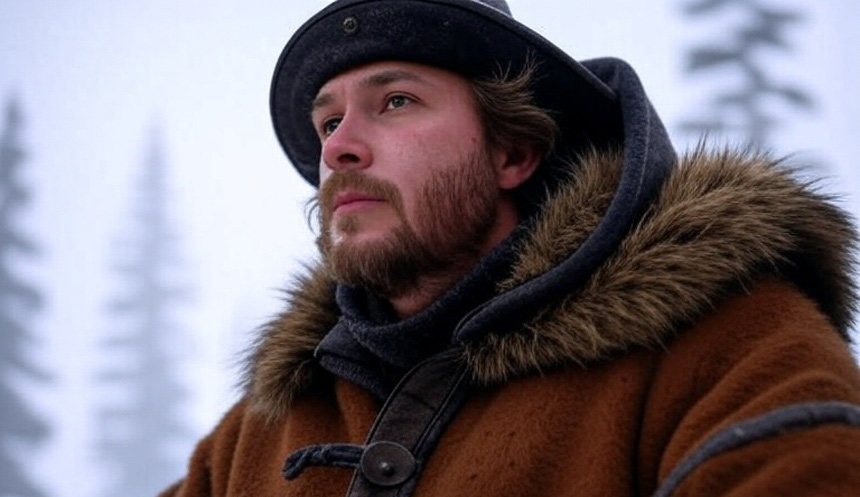

War in the 18th century was unbelievably brutal, especially on the American frontier. There were few rules that prevented mass murder and genocide. This was particularly true during the French & Indian War. Using that conflict as a backdrop, we explore the lives of men like Henri Thevinin, a major character in both Through the Fading Darkness and Beyond the Fading Darkness novels. He is a young man who was forever changed by what he saw, the things he didn’t do, and the guilt he struggled with long after the war ended.
Henri Thevinin was a young man. He came to New France shortly after the war began and was quickly recognized as one of those unique officers who could think through problems and make correct decisions, even under the most extreme situations. His family was well situated with both the King and church, and this opened a door to the officer corps. But Henri was more comfortable working on his own, or around the enlisted ranks. Fortunately, his commander, Colonel Poulharies, understood this about the young lieutenant and had a job for which he was well suited.
After arriving at Fort Carillon in the summer of 1757, Henri was assigned as a liaison between the French army and their Huron allies. While dangerous and difficult, Henri took to the job and soon became comfortable with the sparse life of a frontier scout. He enjoyed sleeping in inhospitable places, eating wild game, and going weeks without experiencing the luxuries of life inside the walls of the fort. He was allowed to dispose of the gaudy white uniform of a French officer and replaced it with a mix of Huron buckskins and hunting shirts made of linen and wool imported from France. His musket and equipment were French, of course, except for the tomahawk and knife which he took from the body of a dead Iroquois warrior after a battle. He completed the look of a rugged man of the frontier with a Phrygian cap that quickly became so sweat stained and dirty that it looked more brown than red.
For the first few months, Henri worked with a local Huron war party whose leader was competent and willing to defer to the French for tactical and strategic decisions. Ironically, that man was killed by British rangers during an ambush, and another warrior, Waban, came to replace him. Things became difficult.
Consider becoming a free or paid subscriber.
Waban was older. Henri guessed he could have been close to forty years old. His long black hair had streaks of grey that, contrary to what one would expect, made him look fiercer and more dangerous than the average Huron. Even before Waban came to Fort Carillon, Poulharies advised Henri to beware of old men in places where most men die young. Waban’s grey hair and scars were testaments to the prudence of that advice.
Like all Huron warriors, Waban was lean and muscular. The sides of his head were shaved, and he typically did not wear a shirt. His leggings, moccasins, and breechcloth were accented with symbolic feathers and beaded necklaces that Henri believed probably served as some sort of charm or protective talisman.
In battle Waban was ruthless. He and his warriors took no prisoners and would often cut scalps and ears off the enemy wounded even while the victims were still alive. He was indiscriminate with his killing and seemed to spend a great deal of time thinking about new ways to inflict pain on his enemies. Though he had never witnessed it himself, Henri heard rumors that Waban was particularly fond of making men watch as their families were murdered before them.
For these reasons, Henri found Waban and his warriors detestable, but understood his job was to create enough terror and suffering on British soldiers and settlers that they would flee at the sight of a Huron warrior. Unfortunately, Waban was not happy with watching his enemies run away. He had to kill them, and this created situations where Henri lost complete control during fights. Henri felt this was unacceptable.
That morning, they had come across a company of Virginia riflemen who were part of an army gathering near Fort William Henry under the command of British General Abercrombie. Waban acted without informing Henri and the results were predictable. What should have been a simple ambush turned into a pitched battle that resulted in Waban losing half his warriors before retreating. Henri was furious and became even more so by Waban’s indifference to their losses.
Later that day, Henri caught up with Waban as he and the surviving warriors were nearing the gates of Carrillon.
“Waban!” Henri shouted from a short distance away. Waban turned his head, saw Henri and kept walking. “Waban, why did you attack without coordinating with me? The rest of us were not in position to provide support?”
Waban kept walking, “I felt the time was right. The Virginians were weakened. They started to flee.
“No, they were repositioning to repel your attack.”
Waban stopped and stood squarely in front of Henri. His shoulder was bleeding from what looked like a bullet wound but the old warrior showed no reflection of pain, “It was my choice to make. I am the war chief for the Hurons at Carillon.”
“No, it was not your choice. You are here to support my king’s efforts to secure Lake Champlain and win the war against the British. Your chiefs ordered you to follow the commands of my general. I am my general’s liaison. You are to follow my commands.”
Waban stepped closer to Henri, “You and your general do not understand the way we make war. Your army walks through the forest like a herd of cattle and does not know how to use the land to help you fight. You are children who should be learning from us, not giving orders. My warriors are here to kill English. We are here to seize lands that belong to our enemies, the Iroquois. We are here to take scalps and bring back tributes to our villages to cover the graves of our dead. We are not here for you.”
Henri did not back away, “We provide you and your warriors with weapons, ammunition, powder, food, and whiskey. Your leaders gave their word to my king’s emissaries that you will remain loyal to our cause. Are you threatening to break your people’s treaty with France?”
Consider becoming a free or paid subscriber.
Waban leaned over slightly so their eyes met, “I threaten nothing, Lieutenant. You seem angry and emotional like a stupid little girl. Your king will get his English scalps. But you are young and do not know what you are speaking about. My warriors will fight by my orders alone. That is the way it will be.”
Waban started to walk away, but Henri grabbed his arm, “I saw you shoot that boy in the back. You ran away and did not even take his scalp. You failed to finish the job. There was no honor in it.”
Waban stopped but did not turn around, “I saw a dead Englishman. That is all that matters.” He continued toward the fort’s front gate and spoke over his shoulder, “There will be many more dead before this war is over, Lieutenant Henri Thevenin. That boy will not be the last English I kill.”
Henri watched Waban disappear into the Huron encampment near fort’s the parade ground. He wiped his face with his dirty hand and whispered to himself, “Bon sang….”
Later that night, after cleaning himself up and eating a hearty serving of venison stew, Henri walked to the fort’s main administrative building. As he stepped into the outer room of the commandant’s office and nodded politely to the two guards standing at attention on both sides of a double door. He cleared his throat, knocked, and heard Colonel Poulharies’ chair slide across the wood floorboards.
“Enter,” Poulharies said.
Henri stepped in and saluted, “Sir, may I have a moment?”
“Ah, Lieutenant Thevenin. Yes, of course, come in.”
Henri approached the desk and saluted again. Poulharies smiled, returned the salute without getting up and pointed to a chair on the opposite side of the desk, “Be at ease, Henri. Please sit. What is on your mind?”
Henri cleared his throat, “I am having issues with one of the Huron chiefs. The one named Waban.”
“What sort of issues?”
“He does not follow orders, and it is costing us men and materiel.”
“How so?”
“In this morning’s engagement, he refused to follow orders and carried out a flanking maneuver that we were not in position to support. If he had obeyed my commands and allowed the rest of the company to get in position, we would have carried the day. Instead, we suffered a loss and took many casualties.”
Poulharies leaned back and folded his hands in his lap, “Did you speak with him?”
“Yes, sir.”
“And what did he say?”
“He said he will continue to lead his warriors as he sees fit.”
“And how did you respond?”
“He walked away before I could say anything.”
Poulharies nodded and gave Henri a frustrated look, “These damnable savages. Every officer who has ever worked with them goes through the same thing. They are insolent, insubordinate, and at times, more dangerous than they are worth.”
Henri did not say anything. Poulharies leaned back, exhaled, and pinched the bridge of his nose to push a headache away, “But I am afraid they are a necessary evil. While problematic, their brutality serves a larger purpose. The British, American colonists, and even the Iroquois are afraid of the Huron war parties. Fear has tremendous strategic value.”
“I understand, sir,” Henri replied, “but I am afraid he will do something that will besmirch the honor of the King and army.”
“And yours?”
“My what, sir?”
“Are you worried about your honor?”
Henri shrugged and thought about it for a moment, “Of course, what man would not be? But my primary concern is for the mission.”
“Henri, you are a young man. War is always ugly, and war in America is especially so. No one will hold you responsible if anything unfortunate occurs.”
Henri looked at his commander for a long time as he considered Poulharies’ words, “And what of God?”
Poulharies smiled, stood and went to a small sideboard and poured two glasses of sherry. He handed one to Henri and returned to his chair behind the desk, “That is a question soldiers have asked themselves since the beginning of time. As young men, your father and I discussed it many times after the battles we fought in Europe. But you have nothing to fear. If God was ever in this vast wilderness, he left it long ago. America is an uncivilized place. God knows this, and like me, he will not hold what you do here against you when judgement comes.”
Henri slowly nodded and downed the sherry with one quick gulp, “With respect, sir, I do not know if I believe that.”
Poulharies shrugged, “These are matters to be discussed with priests and philosophers. You should put them aside for now.”
Poulharies stood, stretched, and walked around to Henri’s side of the desk. Henri stood up and faced his commander and mentor. Poulharies took Henri’s glass and set it on his desk, “We are in the business of war, Lieutenant. And this business requires us to employ allies who can strike fear in our enemies. Ultimately, Waban’s actions will save French lives and bring victory more quickly. That is the way I see it. I am fairly certain God will see it that way as well.”
Poulharies shook Henri’s hand, “You are a good officer, Henri. Try to not trouble yourself with these doubts.”
Henri nodded slowly, shook Poulharies’ hand, and saluted, “Thank you for your time, sir.”
Poulharies returned Henri’s salute, “Anytime.”
Henri went back to his quarters, a small room at the base of the south bastion that was barely big enough to hold his cot. There was a tiny stone hearth on one wall, no bigger than a foot across and a few inches deep. Henri lit the fire and sat on the thin husk mattress. He took his cap off, rubbed his long hair vigorously, and leaned back against the wall. Thinking about Poulharies’ advice, sleep came and carried him away from Fort Carillon, Waban, and the bloody war.
Two days later, Waban, his warriors, Henri, and five French rangers gathered on the central ward inside the walls of Fort Carillon. Henri stood in the middle of the loose circle and was holding a map as he outlined the new mission Poulharies had given them.
“Later this afternoon, just before sunset, we will leave here. Colonel Poulharies has ordered us to scout the various settlements to the west and south of the British position at Fort William Henry.”
Most of the Hurons did not speak French, so Waban translated the orders. Henri noticed that he did this with far fewer words than seemed logical, and occasionally, some of the warriors would chuckle after Waban’s translation.
Henri held up the map and pointed at it, “I cannot stress enough that this mission is a reconnaissance only. We must not engage with the enemy or settlers. They must not know we are observing them. General Montcalm needs this intelligence to plan the attack on William Henry. If the British or Americans learn which settlements we are observing, they will be able to deduce the route our army plans to take during the attack. We must remain silent and undiscovered.”
Waban translated the orders into what Henri thought might have been three words. Several warriors looked around at each other and mumbled. One fixated on a murder of crows that flew overhead. Waban took a step forward.
“How many settlements are we observing?”
Henri glanced at his map, “At least six that I know of. There may be more that we do not know about. That is why we are doing the reconnaissance.”
“I will take my warriors and see what we can discover to the south of William Henry. You take your French rangers and scout the settlements to the west. There is a Moravian village to the southwest. We will meet there in five days,” Waban said without asking.
Henri thought for a moment and did not try to hide his frustration, “I am not sure we should split up.”
Waban exhaled, placed the butt of his musket on the ground and leaned against the long barrel, “Lieutenant Thevinin, as you can see from your map, the settlements are spread over a large area. If we do not break into separate parties, it will take twice as long to cover all the villages and settlements. We must operate separately to accomplish the assignment.”
Henri looked at Waban for a moment. The truth was that he would be relieved to spend a few days away from the Hurons. He glanced at his map once more and nodded his head, “Yes, Waban, your logic is sound. You take your warriors south. We will scout to the west.”
Waban smiled slightly and nodded, “Agreed. We shall leave immediately.”
“Colonel Poulharies’ orders are to leave before sunset.”
Waban shrugged and cinched his lip in a way that looked strangely French. Henri thought Waban might be mocking him, “We shall go now. It is better.”
Before Henri could reply, Waban said something to the men around him and the Huron warriors walked away. Henri shook his head and watched him go, “Good riddance you arrogant bastard.”
Frantisek Skacel picked another rootworm off the cornstalk and dropped it in a small burlap bag. It was hot and she and the other women had been working in the field since sunrise. Standing upright, she wiped her face on the short apron she always wore, removed her haube and retied her long blond hair into a tight bun. Such a provocative display was forbidden by the village elders, especially in the presence of men, but out in the fields, surrounded by the other women, Frantisek saw no harm in it.
After replacing her haube, she straightened her simple linen blouse and homespun wool skirt and called out to the two younger girls who had worked beside her all morning. They each tied up the insect filled sacks and began making their way through the forest of stalks. About halfway back to the settlement, a Huron warrior stepped in front of her. She tried to scream, but before she could, the Huron locked his hand around her mouth, ripped the haube off her head, and pulled her close. He smiled as he drew a large scalping knife from a sheath tied to his belt.
Frantisek tried to remain calm as she and the other women were dragged from the cornfield. When they entered the small village green, she saw that most of the women had bloody noses or cuts on their faces where they had been beaten. She and the others were thrown to the ground with the children. Families huddled together and watched as the group was surrounded by ten Huron warriors.
The scene around them was horrific. The men were being shot or struck down with tomahawks. As Moravians, they had no weapons to defend themselves. Some tried to surrender and were shot in the face at point blank range. As always, Waban and his warriors took scalps from dead and wounded alike.
As the cabins burned around them, Waban stood in the middle of the chaos. He shouted an order, and the surviving men were brought to kneel in front of him. Five warriors stood behind each captive. Another warrior dragged an elderly man out of a small church and throws him down in front of Waban. The man was dressed in a plain white linen long sleeve shirt and black pants. Like all the Moravian men, he had a well-trimmed beard, but his chin hairs were stained red. Blood flowed out of his mouth where most of his front teeth had been knocked out. His thin, sweat-soaked white hair stuck to the large bald spot. Frantisek watched as the old man got on his knees and began to pray, “Vater!”
The old man did not acknowledge his daughter’s pleas. He looked up at Waban and spoke in heavily accented English, “Please, sir, spare us. We are a peaceful people. We do not have any weapons and mean no one any harm.”
Waban looks at the old men and the other Moravians. Everyone is on their knees praying.
“We are good Christian people. Our only purpose is to spread the word of God,” the old man said as he struggled to hold back his tears.
Waban stepped closer and pointed at the old man with his tomahawk, “Christian?”
The old man smiled and nodded rapidly, “Yes, yes. We are all Christians. We mean you no harm.”
Waban nodded, raised his tomahawk, and buried it in the old man’s forehead. Frantisek and the other women screamed in horror. Waban yanked the tomahawk free, tucked it in his belt, and took the old man’s scalp with a large knife. He held the scalp up and gave a war cry. Methodically working his way down the line of male captives, Waban killed them all in the same way.
When he is finished, splattered with blood and viscera, Waban walked over to the women and children. He was about to say something when Henri emerges from the forest, followed by the French rangers, “Waban!”
Waban turns to look at Henri and smiles.
“Waban! What are you doing?!”
Waban shrugged, looked around and smiled at Henri, “What does it look like I am doing?
Henri walked to within an a few steps of Waban and stopped. He looked at the cowering women and children, “I told you to reconnoiter this settlement. I did not tell you to attack. These people are missionaries. They are neutral in the war. They pose no threat.”
Waban pointed at the dead Moravian men, “Only the dead pose no threat.”
“You have disobeyed my orders and possibly revealed our plans to the enemy!” Henri shouted in rage.
Waban looked at Henri for a moment, waved his hand, and smiled at Henri as the Huron warriors began shooting and tomahawking the women and children. Stunned, Henri did nothing for a few seconds before he could come to grips with what he was seeing. He raised his rifle and pointed it directly at Waban’s chest, “Order your men to stop killing the women and children, or I will kill you where you stand!”
Waban stepped closer so that the muzzle of Henri’s rifle touched his chest. He looked over his shoulder and watched his warriors continue to work their way through the women and children.
“Do it! Now!” Henri shouted again.
Waban smiled at Henri coldly, “You tell them.”
Henri kept his rifle up and ready to fire. He looked at the warriors, and shouted over the women’s screams, “Stop! Stop now!”
None of the warriors even looked up at Henri and continued to use their blades on the victims, “Stop!! I order you to stop!”
Frantisek was the last to die and accepted the death blow silently. The warriors finished taking scalps, gathered behind Waban, and calmly reloaded their weapons.
Henri’s eyes were locked on the dead women and children. Slowly, Waban reached up and pushed the muzzle of Henri’s rifle away. He turned to his men, “Stop… do not kill the white women and children.”
Waban and his men looked at Henri and laughed. Henri lost all control and smashed the butt of his rifle into Waban’s face. Blood poured out of Waban’s nose. He stumbled back as Henri used the rifle butt again. Waban regained his footing, grabbed Henri by the shirt and in one quick motion threw him to the ground, drew a knife and held it next to Henri’s left eye, “I have had enough from you, little man! Enough!”
Waban looked up and saw the French rangers and Huron warriors pointing their weapons at each other. They were shouting at each other in a mixture of French and Huron slang. Waban looked at Henri as if he was considering something and then cut a quick slit down Henri’s left cheek. He leaned in close and whispered in perfect French, “A reminder that you and I have unfinished business.”
Waban stood up straight and looked at his men, “Lower your weapons.”
The Hurons slowly lowered the rifles and muskets. The French did the same. Henri jumped to his feet. He is breathing hard and touches the cut on his cheek, spits, and takes a moment to regain his composure, “Gather your things. Leave nothing that can be used to identify us. We must make our way back to Fort Carillon before the enemy discovers what has happened here.”
The Frenchmen nodded and walked away. Waban simply stared at Henri for a long moment before retrieving a piece of venison jerky from his satchel. Casually holding his musket in the crook of his arm, he exhales as if he is letting go of a deep frustration and takes another bite. With his mouth full, Waban leans forward to within a few inches of Henri’s face, “As you wish… Lieutenant.”
Waban and his warriors followed the French rangers into the forest. Watching them leave, Henri walked over to the pile of dead women and children. He crouched beside Frantisek’s body and noticed a leather necklace with a small wooden cross around her neck. Henri gently removed it, put it in his pocket, and followed the others into the dark forest.