

From the Beginning, BTFD is a Story of Intrigue, Murder, and Revolution
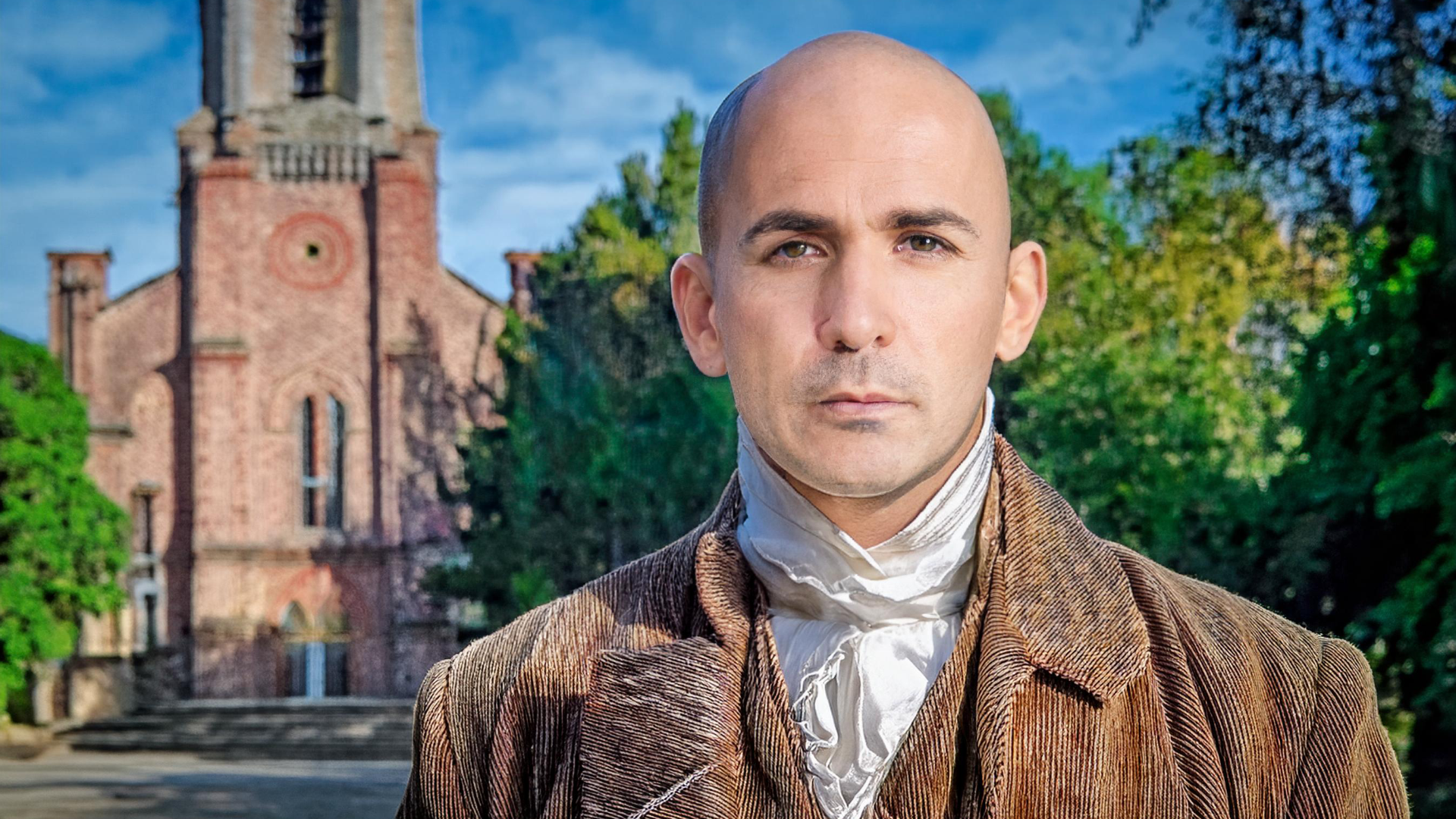
Robert Connolly fidgeted with a small block of wood and wondered why Lord Dunmore was making him wait. The whitewashed walls of the foyer were covered with knives, swords, and over five hundred firearms. As he looked around the room, it occurred to him that the hundreds of weapons were either meant to give visitors the impression of a grand Scottish hunting lodge or, more likely, serve notice that the man who occupied the house was a person of great power. The mansion’s opulence was a display of authority that reminded Connolly why he had worked so hard to become Dunmore’s agent on the frontier. The fastest way to achieve status and affluence in the colonies was to do things for powerful people that other men would not do.
Rising from the upholstered bench he had been sitting on for over an hour, he examined the walls carefully. He leaned closer to inspect the highly polished handle of a rapier and heard footsteps echoing off the planked floorboards before a footman rounded the corner. Dressed in fine clothes that befit the status of a black man working in service to a royal governor, he spoke in King’s English with only a hint of a Caribbean accent, “Lord Dunmore will see you now, sir.”
Connolly followed the footman through the main hall and up a staircase before entering Dunmore’s private study just to the right of the top landing. There, John Murray, Fourth Earl of Dunmore, Governor of the Royal Colony of Virginia stood looking out a large window that opened to the mansion’s exquisitely manicured garden.
Hearing the door shut behind him, Connolly bowed in courtesy, “Lord Dunmore, as requested, I am at your service.”
Dunmore continued to look out the window for a moment, “Dr. Connolly, it is good of you to come. How goes Fort Dunmore?” he asked, in a businesslike tone, devoid of what was normally his friendly disposition.
After the war with the Shawnee, in recognition of his victory, the governor renamed Fort Pitt, Fort Dunmore. Robert was still not accustomed to it, and had to think for a moment before answering, “All is well, your Lordship. The treaty with the Shawnee signed last October still holds, and Chief Cornstalk has been actively engaged in pacifying some of the younger warriors who survived the war. There are still malcontents, particularly the one they call Blue Jacket, but Cornstalk assures me he can be managed. Separately, the Pennsylvanians continue to make trouble and pass caustic threats,” Connolly said.
“You would think the Quakers could control their rabble. Will they become a problem again?” Dunmore asked, still focused outside.
“No, your Lordship,” Connolly replied.
Dunmore turned and smiled in a more familiar manner, “Good. And our land projects?”
“I have continued to quietly send surveyors into the Ohio Country to mark prime parcels for your purchase. By the end of the year, we should have somewhere close to 20,000 acres marked and ready for acquisition, provided the Pennsylvanians do not cause any further trouble.”
Dunmore stepped over to a small table with a crystal decanter and two glasses, “Madeira?” he asked, pouring himself a glass of the sweet wine.
“Certainly, thank you,” Connolly replied.
Dunmore handed him a glass and motioned to two comfortable chairs next to the fireplace, “Have you heard any rumblings along the frontier from these so-called Committees of Safety that damnable group in Philadelphia has created?”
Connolly noted that Dunmore refused to even say the words Continental Congress, “Only rumors and speculation, your Lordship.”
Dunmore stared into the flames as he spoke, “Since I dismissed the House of Burgesses last year, I have heard constant rumblings coming from the coastal planters and landed gentry, many of whom are active officers in the militia. I am afraid that these treasonous committees are beginning to overlap with the militia leadership. If that becomes widespread, it will represent a formidable challenge to the king’s interests in Virginia.”
Connolly took a sip of the madeira, “Yes, I am afraid the wrong Lewis was killed at Point Pleasant last year.”
“Charles Lewis was just as sympathetic to rebellious tendencies as his brother Andrew,” Dunmore said, “but even if they had both been killed, it would have been insignificant compared to the total losses for which I was hoping. It was not an accident that I was slow to bring my half of the army down the Ohio River from Fort Pitt. I had hoped the Shawnee would wipe out all of Lewis’ men. If that had transpired, the militia’s traitors would no longer be a threat. But that strategy failed with Cornstalk’s incompetence.”
“So, how do you plan to deal with the disloyal members of the militia now?” Connolly asked.
Dunmore finished off his drink and set the glass on the table as he walked back to his desk. Connolly rose and stood politely on the opposite side, “I have not decided on a final strategy yet. I did, however, send General Gage a letter requesting a regiment of British Army regulars be moved to Williamsburg, but have not heard back. Frankly, I do not expect reinforcements anytime soon. As Gage continues to confiscate powder and weapons in the towns and villages around Boston, something is bound to happen. He will be overwhelmed. Just last September, when a wild rumor circulated that the Royal Navy was bombarding Boston, fourteen thousand members of the Massachusetts militia descended on the town within a matter of hours. The war has not even started yet, and Gage is already outnumbered.”
Connolly nodded but said nothing. He had learned to let his benefactor feel as if he was doing all the thinking. Dunmore picked up a piece of paper and glanced at it before putting it back down, “We must gauge the attitudes of the Ohio tribes and Loyalists along the frontier. Specifically, if war breaks out, how many Indian nations can we expect to rally to our support? I must know this number to develop a proper strategy,” Dunmore said.
Connolly shifted slightly from one foot to the other, and cleared his throat, “Your Lordship understands, of course, that the recent war with the Shawnee will not inspire them, or any other tribe in the Ohio Country to ally themselves with us, correct?”
Dunmore looked at Connolly for a moment and tapped his finger on the surface of his desk as he was thinking, “I do not just want them as passive allies. I need them to be active participants against the rebels. If we can encourage them to begin raiding along the border once again, it will provoke the militia to respond as they did before, drawing manpower away from the coast. This will allow me to organize a Loyalist regiment locally, and British regulars from Boston, should they come.”
Connolly thought for a moment before answering, “Barring an egregious breech of the treaty, I can see few scenarios where the Ohio tribes will want to enter another war so soon after the Shawnee defeat at Point Pleasant. The war interrupted their fall harvest, and many Shawnee towns went hungry over the winter. I suppose that land, food, weapons, and perhaps even bounties for scalps might entice the more radical Kispoko to take up arms again, but most of the clans will simply want to plant their spring crops and rebuild.”
Dunmore turned to look out the window once again as he thought about the stakes. After a minute of silence, he turned, pulled a piece of paper out of the center drawer of his desk, and began writing, “I am extending a line of credit for £1000 from the colony’s treasury. I want you to return to Fort Dunmore and quietly reach out to any tribal chief who might be willing to take up arms alongside his Majesty’s forces should war come against the rebels. Offer them money, food, and weapons. If the Shawnee lack motivation, take whatever steps are necessary to entice them to join our cause. Despite our strained relations, we need another uprising against settlements along the frontier, even if we must manufacture circumstances ourselves.”
“His Lordship understands that the casualties on both sides could be… extreme, correct?” Connolly asked.
“I am certain of it, Dr. Connolly. But if the deaths of disloyal settlers and native savages furthers his Majesty’s goals and objectives in America, that is an acceptable outcome.”
“As you wish, you Lordship. I will make the arrangements.” He stepped back from the desk, and bowed, “Thank you for the madeira.”
Dunmore gave a courteous nod, picked up a quill and began jotting a note. Before Connolly reached the door, he looked up, “Robert?”
“Yes, your Grace.”
“Be thorough in your work.”
Subscribe today and receive to behind the scenes articles, interviews, and character backstories.