
History course
World War II: Depression, War and the Peace That Followed
18-Week History Course
History from the record
Every lesson opens with a primary source and asks what it shows, who made it and why, and what it leaves out. Copyrighted works are linked at their source, never copied.
For the parent or teacher
Each lesson has an answer key, discussion guidance and, where needed, a content note before the lesson. Some lessons describe the Holocaust, mass killings and wartime atrocities; the notes say what to preview.
Course introduction
This semester we are going to follow American families, and then the whole world, from the stock market crash of October 1929 to the first years of the Cold War. It is a long road. It runs through bread lines and dust storms, through the rise of Hitler, Stalin, Mussolini and Japan’s militarists, through Pearl Harbor and Midway, Normandy and Bastogne, and on to the trials at Nuremberg and the Marshall Plan.
Here is how we will work. Almost every lesson starts with the real thing: a speech, a government report, a photograph or a film made at the time. You will read or watch it before anyone tells you what to think about it. Then you’ll read the facts, study a map or photograph, and answer a short lesson check, including a question about the source itself: who made it, when, and why.
We will be plain about what the record shows. The Nazi and Soviet regimes murdered millions of people as a matter of state policy. After America came into the war it fought and sacrificed to win it. The main characters are ordinary Americans: soldiers, sailors, airmen, Marines, factory workers and reporters.
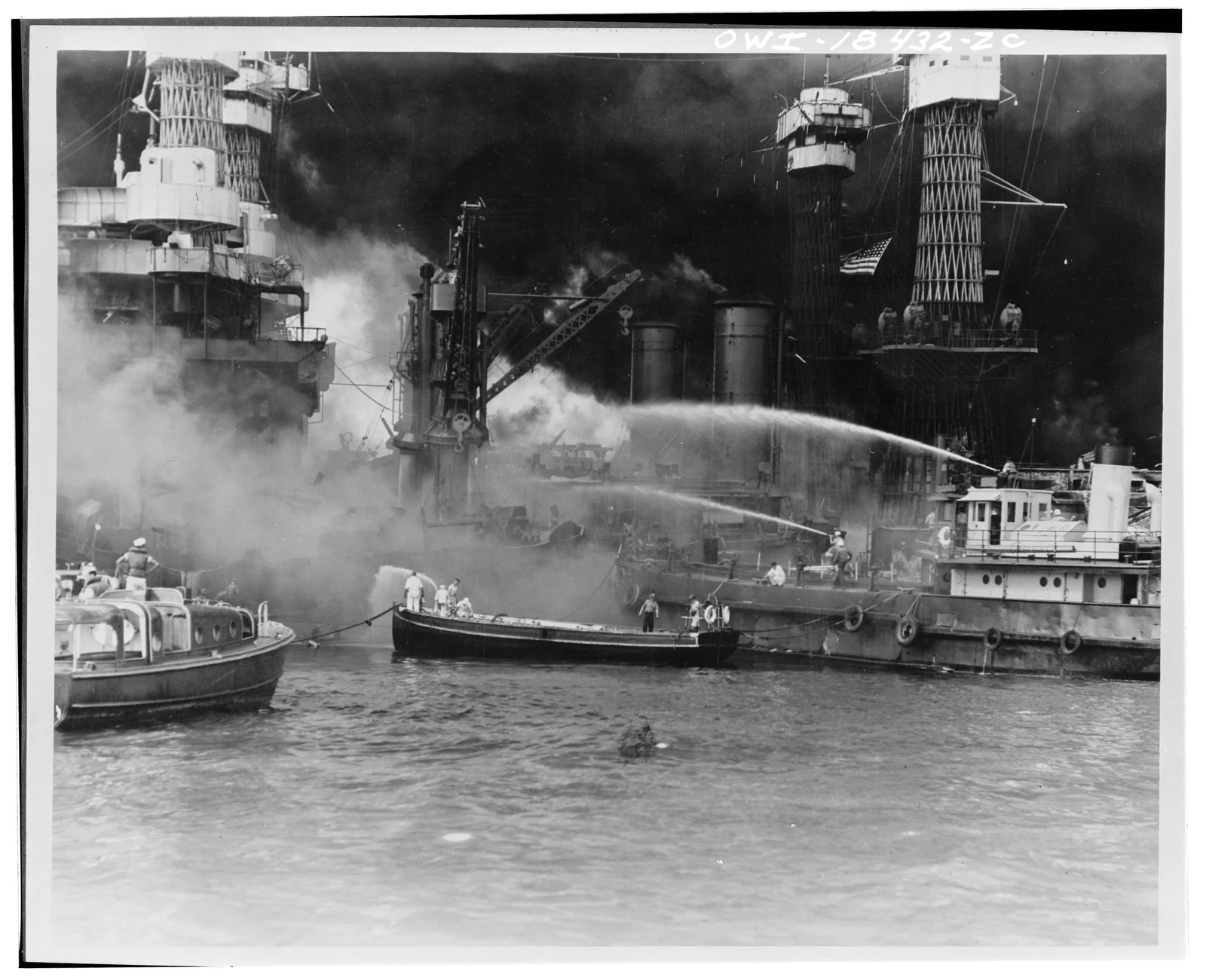
West Virginia is part of this story too. You’ll see the homestead town of Arthurdale, the battleship USS West Virginia at Pearl Harbor, Woody Williams of Quiet Dell on Iwo Jima and Chuck Yeager in the skies over Europe.
Along the way you’ll build toward your own short documentary, made from real archival footage, photographs and maps. By the end, you should be able to read a primary source the way a historian does, and tell a true story from it.
From the Crash of 1929 to the start of the Cold War, in the record. Your student works from the record itself: speeches, orders, laws, newspapers, photographs, maps and the government’s own films.
Units 1–9 (26 lessons) of the 18-week course are ready now. More units, a documentary capstone and a final exam are added as they are built.
Grades 9–12, about two lessons a week, each in two sessions. Aligned to West Virginia Department of Education academic standards.
The course opens with an active Pharos Terminal subscription.
Subscribe to start Lesson 1 Already a subscriber? Sign in
Pharos Terminal
Every course is included
This course is included with an active Pharos Terminal subscription, along with every other course, new courses as they’re released, a new Nexus Point every day and the parent tracker. Lessons are aligned to West Virginia Department of Education academic standards.