
History course
The French and Indian War
9-Week History Course
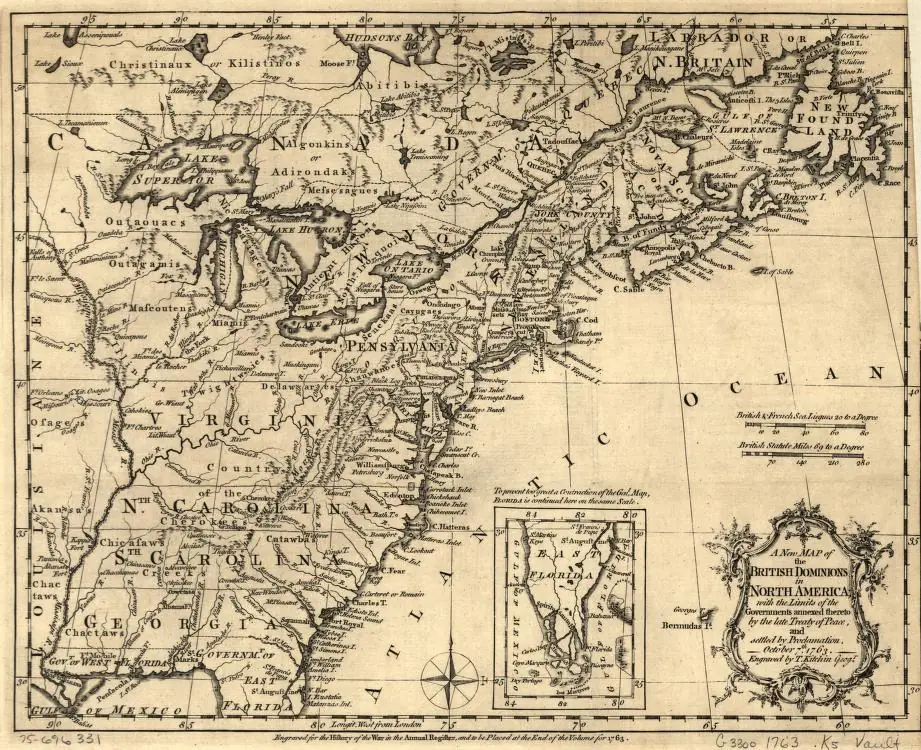
The record, from every side
Your student reads the letters, journals, treaties and orders of the people who fought and negotiated the war: British, French, colonial and Native. Each power’s aims are stated in its own documents’ terms, in the setting of its own day, and every claim traces to a source printed in the lesson.
For the parent or teacher
Parent notice: what each part of the course contains, so you can preview it first.
- Weeks 2–4. Parent notices: Lesson 4 (a killing at Jumonville Glen; accounts differ), Lesson 6 (battle deaths), Lesson 8 (raids and captivity, including the killing of a captive’s family, told in her narrative). Described plainly, not graphically.
- Week 5. Parent notice: Lesson 10 (the forced removal of Acadian families; the killing and capture of surrendered prisoners after Fort William Henry). Unit test this week.
- Week 7. Parent notice: Lesson 14 (war against the British posts in 1763; the return of captives in 1764; the smallpox question at Fort Pitt is raised but not answered).
Each lesson’s parent note says what to preview that day, and every lesson has a full answer key.
Course Big Question
Why did each power fight, and what did each win or lose?
Course introduction
The war that decided North America. Most teens meet the French and Indian War as one paragraph on the way to 1776. They never see that a war fought largely in and around western Virginia, among Britain, France and powerful Native nations like the Iroquois Confederacy, each pursuing its own interests, decided who would rule North America. This nine-week course has students work through the letters, journals, treaties and orders of the people who fought and negotiated it. It works if each student can explain from those sources why each power fought, how the war was won, and how its debt and the Proclamation of 1763 led toward the Revolution.
Five powers, one set of questions. Britain, France, the colonies, the Six Nations (Iroquois Confederacy) and the Ohio nations (Delaware, Shawnee, Mingo) are each asked the same things: what did it want, what did it do, and what did it win or lose? Each acted for its own interests, and each is judged by the laws and customs of war and treaty-making that people of the 1750s and 1760s stated for themselves.
Sources first. Every lesson opens with a period document: treaty minutes printed by Benjamin Franklin, Washington’s journal and letters, a French commander’s memoir, Post’s journals of his 1758 mission, Vattel’s Law of Nations, Rogers’s rules for ranging, the Detroit journal of 1763, the treaty of Paris and the Proclamation of 1763.
From the rival claims to the Ohio Country in 1749 to the Fort Stanwix boundary of 1768, in six units: rival claims, courting the Six Nations, Braddock and the frontier war, the nations’ choices and the turn of the war, and the peace and its bill. Much of the war was fought in and around western Virginia. Every writing task has its own expectations for the Grades 7–8 path, Grades 9–10 and Grades 11–12. There are map and source quizzes, two DBQs, a unit test in Week 5 and a final in Week 9, and the capstone project is presented in Week 9.
Grades 9–12, with a Grades 7–8 path. 9 weeks, two lessons a week of about 55 minutes, plus the week’s reading in the course books. Aligned to West Virginia Department of Education academic standards (Social Studies and English Language Arts, grades 8–12).
The course opens with an active Pharos Terminal subscription.
Subscribe to start Lesson 1 Already a subscriber? Sign in
Pharos Terminal
Every course is included
This course is included with an active Pharos Terminal subscription, along with every other course, new courses as they’re released, a new Nexus Point every day and the parent tracker. Lessons are aligned to West Virginia Department of Education academic standards in English Language Arts, Science and Social Studies.