
History course
The American Revolution
18-Week History Course
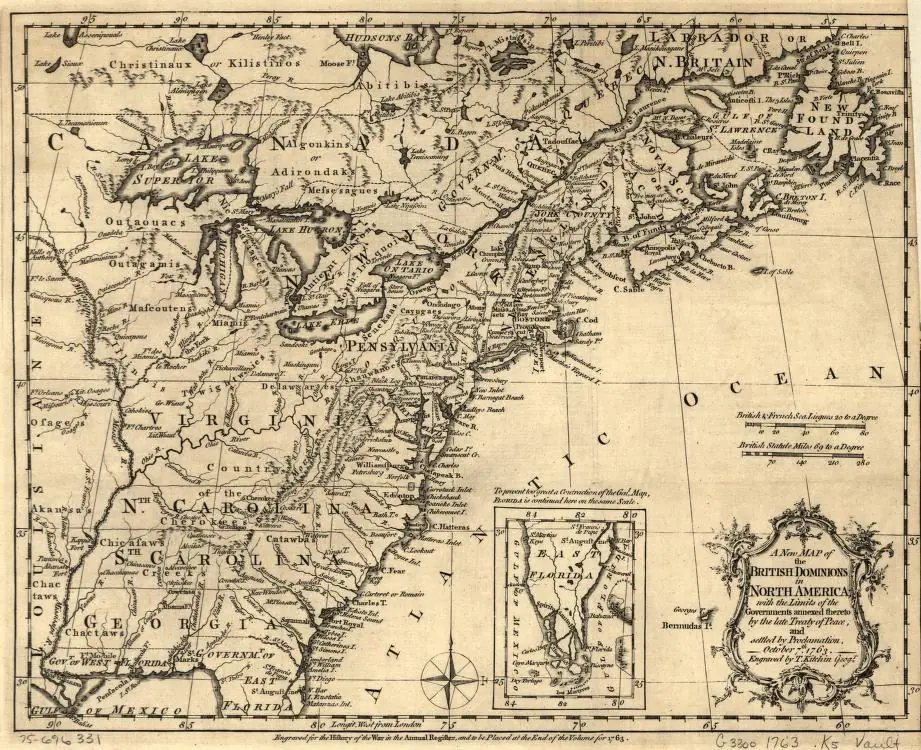
The record, from every side
Your student reads what the men who made the Revolution wrote: the acts of Parliament and the colonial answers, the case for Parliament and the king’s government, the Declaration, and the letters and orders of the commanders on both sides. Patriots, Loyalists, the king’s ministers and France are each stated in their own documents’ terms, in the setting of their own day, and every claim traces to a source printed in the lesson.
For the parent or teacher
Parent notice: what each part of the course contains, so you can preview it first.
- Weeks 3–5. Parent notices: Lesson 5 (five people killed in the Boston Massacre), Lesson 9 (battle deaths at Point Pleasant; a governor’s offer of freedom to enslaved men who would fight for the king), Lesson 10 (deaths at Lexington, Concord and Bunker Hill). Plain, not graphic.
- Weeks 8–11. Parent notices: Lesson 16 (General Montgomery’s death at Quebec), Lesson 19 (battle deaths in the Saratoga campaign), Lesson 22 (hunger and cold at Valley Forge). Midterm in Week 9.
- Weeks 12–14. Parent notices: Lesson 23 (frontier raids and sieges, the killing of Cornstalk while detained at Fort Randolph, and Washington’s 1779 orders to destroy Six Nations towns and crops), Lesson 24 (a deadly sea battle), Lesson 25 (tar and feathers, prisons and exile used against Loyalists), Lesson 28 (battle deaths at Cowpens). Plain, not graphic.
Each lesson’s parent note says what to preview that day, and every lesson has a full answer key.
Course Big Question
Why did loyal subjects of the king become rebels, and how did an improvised army and its leaders win?
Course introduction
From loyal subjects to a new nation. Teens usually learn the Revolution as dates and slogans and rarely read what the men who made it actually wrote. This one-semester course follows 1763 to 1783 through the Founders, the Continental Army and its leaders, France, King George III’s government, the British Army and the Loyalists, in their own letters, orders, debates and pamphlets. It works if each student can explain from the record why loyal British subjects chose independence, and how an improvised army and its leaders beat the world’s strongest military.
Every side in its own words. The Founders and Congress, the Continental Army and its leaders, France, King George III’s government, the British Army and the Loyalists are each asked the same questions: what did they want, what did they do, and what did they win or lose? Each is judged by the arguments and standards of the 1760s–1780s, for example the colonists’ appeals to the rights of Englishmen and Parliament’s appeals to its sovereignty.
Sources first. Every lesson opens with a period document: Parliament’s acts, the Stamp Act Congress and the Continental Congress, Dickinson, Seabury, Johnson and Hamilton, Paine and Inglis, the Declaration, Washington’s letters and orders, Knox’s and Greene’s reports, Burgoyne’s defense, the French treaty, John Paul Jones’s report, Morgan’s report of Cowpens, the Treaty of Paris and Washington’s resignation. Jack Kelly’s Band of Giants introduces the army’s leaders from Week 8.
From the bill for the 1763 victory to Washington’s resignation in 1783, in nine units: the arguments over empire, the coming of war, independence, the army’s survival, the wider war, the South and Yorktown, and the peace. Every writing task has its own expectations for the Grades 7–8 path, Grades 9–10 and Grades 11–12. There are map and source quizzes, three DBQs, a midterm in Week 9 and a final in Week 18, and the capstone project is presented in Weeks 17–18.
Grades 9–12, with a Grades 7–8 path. 18 weeks, two lessons a week of about 55 minutes, plus the week’s reading in the course books. Aligned to West Virginia Department of Education academic standards (Social Studies and English Language Arts, grades 8–12).
The course opens with an active Pharos Terminal subscription.
Subscribe to start Lesson 1 Already a subscriber? Sign in
Pharos Terminal
Every course is included
This course is included with an active Pharos Terminal subscription, along with every other course, new courses as they’re released, a new Nexus Point every day and the parent tracker. Lessons are aligned to West Virginia Department of Education academic standards in English Language Arts, Science and Social Studies.