
Literature course
Steinbeck Country
7-Week Literature Course
Literature beside the record
Every lesson reads the chapters in your own copy of the novel and sets them beside the record of the real place: Library of Congress photographs, a government survey of a cannery on the Row, the laws behind the story and the poems and scripture Steinbeck borrowed from. Quotations from the novels are kept to a few words at a time.
For the parent or teacher
These novels are for mature readers. They include a brothel and the people who work there, heavy drinking, suicides, violent deaths and, in East of Eden, a mother who leaves her family. None of it is graphic. The first lesson of each part carries the full content preview, each flagged lesson says what to preview, and every lesson has an answer key and discussion guidance.
Course introduction
Two books, one street. In 1945, John Steinbeck published Cannery Row, a short novel about a single street in Monterey, California: its sardine canneries, its grocery, its brothel, a marine laboratory and a group of easygoing men who live in an old storage building they call the Palace Flophouse. Nine years later he went back to the same street in Sweet Thursday. The war had come and gone, the sardines had vanished and the canneries had gone quiet. Over the next fourteen days you will read both books and decide whether the second one answers the first.
Along the way you will read the real record of the place: a government survey of a cannery that stood on the Row, two Library of Congress images from the Depression, a wartime fisheries report and the GI Bill. You will also read the poems by Tennyson, Longfellow, Carroll, Coleridge and Stevenson that Steinbeck borrowed his chapter titles from. Doc, the center of both books, is based on Steinbeck’s friend Ed Ricketts, a marine biologist who kept a laboratory on the Row.
One valley, two books. John Steinbeck grew up in Salinas, California, in a long farming valley between two mountain ranges. In 1932 he published The Pastures of Heaven, linked stories about a hidden valley nearby that everyone thinks is a paradise. Twenty years later he published East of Eden: the story of his mother’s family, the Hamiltons, and of a family called the Trasks, set in the Salinas Valley from the Civil War to the First World War. Over twenty-one days, in two parts, you will read both.
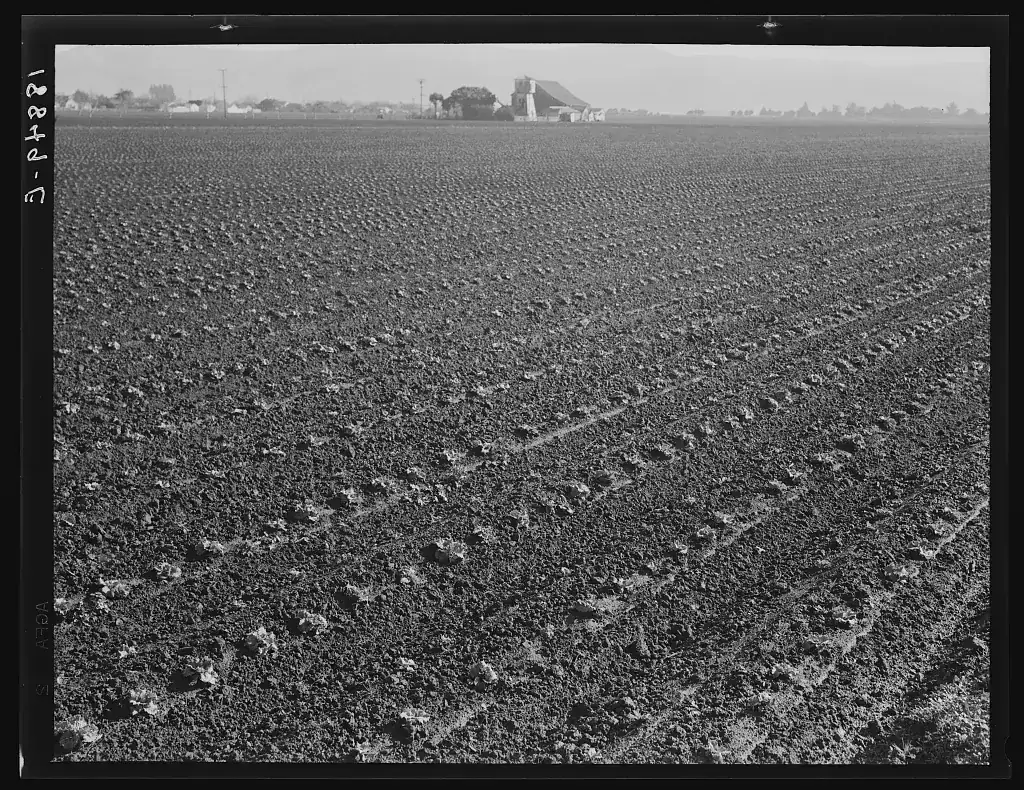
East of Eden retells the story of Cain and Abel, the sons of Adam and Eve in Genesis 4. You will read that chapter in the King James Version, the one the novel’s characters read, and look for how Steinbeck builds two generations of brothers on it. You will also read the real record of the valley: the Homestead Act, under which Samuel Hamilton claims his land, the Chinese Exclusion Act, which shaped the life of the Trasks’ cook, Lee, and two images Dorothea Lange made in the valley in 1939.
Cannery Row to East of Eden. Your student reads Cannery Row, Sweet Thursday, East of Eden and stories from The Pastures of Heaven, a lesson a day, with a short journal, a mid-course essay and a final essay.
Grades 10–12, 7 weeks, one lesson a day of about 105 minutes, including the reading. Aligned to West Virginia Department of Education academic standards. Each family needs its own copies of the novels; any complete edition works.
The course opens with an active Pharos Terminal subscription.
Subscribe to start Lesson 1 Already a subscriber? Sign in
Pharos Terminal
Every course is included
This course is included with an active Pharos Terminal subscription, along with every other course, new courses as they’re released, a new Nexus Point every day and the parent tracker. Lessons are aligned to West Virginia Department of Education academic standards.