
Civics course
From Fireside to Feed: Mass Media and American Democracy
35-Lesson Civics Course · Grades 7–12, high school first
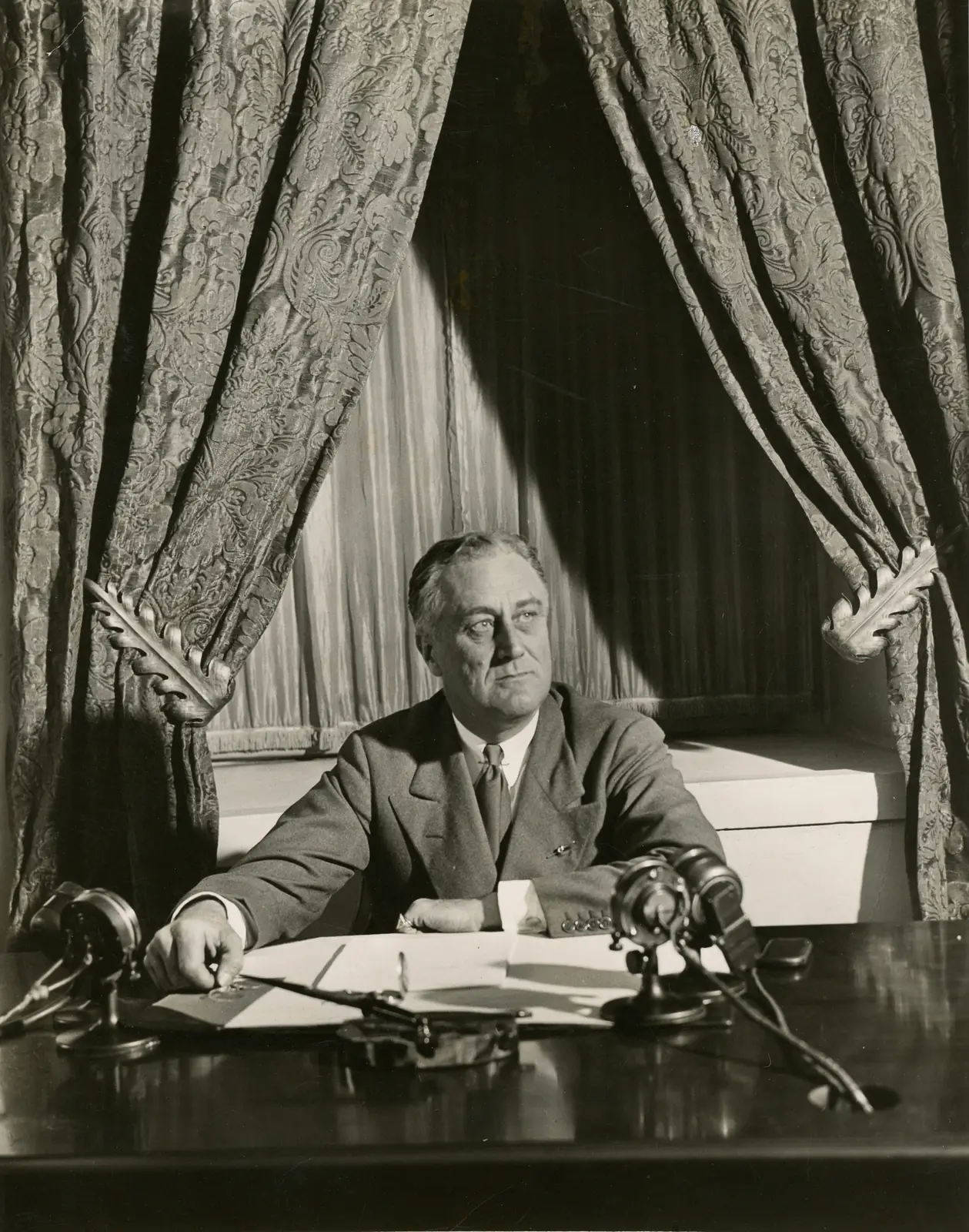
The record, from every side
Students read speeches, broadcasts, front pages, court opinions, statutes, official returns and polls as they were published, each one dated. Every election case starts with each candidate’s own words, then the count and the courts, and the same test is applied to every side. Recent elections are dated case studies taught from the participants’ own words and official records.
For the parent or teacher
Each lesson’s parent note says what to preview that day, and every lesson has a full answer key.
Course Big Question
When Americans got their news from a few national voices, did they agree more on the facts and accept election results more readily, and what did the country gain and lose when those voices gave way to the open internet and the feed?
Course introduction
Problem statement. For most of the 20th century a few national voices, first on radio with Roosevelt's fireside chats and Murrow's reports, then on TV with Cronkite, told Americans what had happened, and losers usually accepted the results. This course has students follow, through primary sources, how each new medium changed who could speak, who was heard and whether a divided country could still agree on the facts, and weigh what was gained and lost when broadcast consensus gave way to a fragmented internet.
How the course works. Students test a claim as a hypothesis, not as settled fact: that elections used to be unifying events, and that the open internet changed that. Every lesson reads dated primary sources, defines its terms first, steel-mans the side it questions, and scores elections from 1876 to 2020 on one Election Test Tracker.
Sources. Speeches, court opinions, statutes, archive records, polls and studies, each linked at the source. The 27 fireside chats form a shared Fireside Chat Source Set. Charts are redrawn from published numbers; photographs are public-domain archive images with credits checked at the original archive. 2016 and 2020 are taught as dated case studies from the participants’ own words and official records.
Thirty-five lessons in eight units, with four unit quizzes, a midterm and a capstone. Students score each election from 1876 to 2020 on the same five-measure tracker, from dated primary sources, and test one claim: that a few national voices made Americans agree more on the facts and accept results more readily.
Grades 7–12, high school first. A suggested 18-week pace, two lessons a week of about 55 minutes, plus the week’s reading. Aligned to West Virginia Department of Education academic standards in English language arts and social studies.
The course opens with an active Pharos Terminal subscription.
Subscribe to start Lesson 1 Already a subscriber? Sign in
Pharos Terminal
Every course is included
This course is included with an active Pharos Terminal subscription, along with every other course, new courses as they’re released, a new Nexus Point every day and the parent tracker. Lessons are aligned to West Virginia Department of Education academic standards in English Language Arts, Science and Social Studies.